10BB Shove Charts for Poker Tournament Bubbles: Factoring ICM and Stack Distribution
Zoe Schulz · Mar 27, 2026
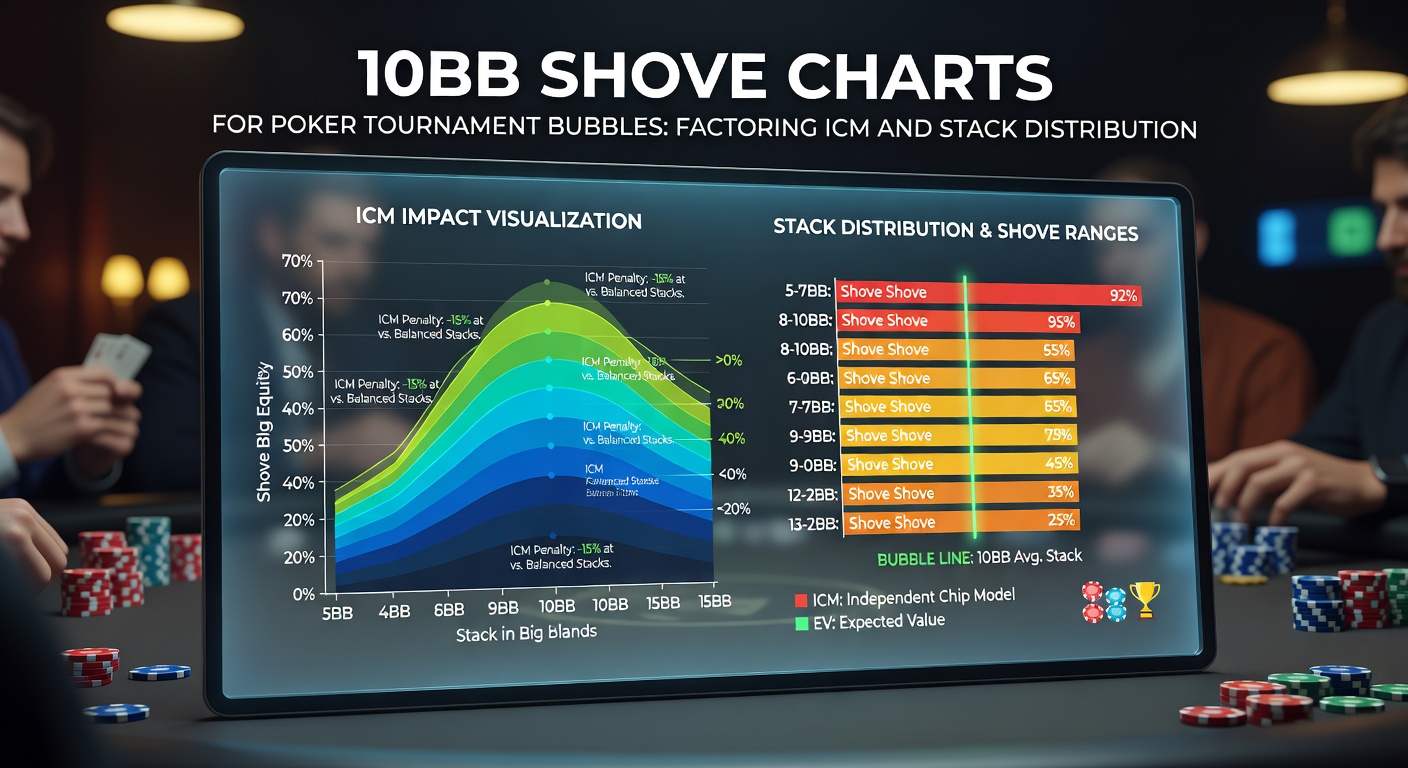
10BB Shove Charts for Poker Tournament Bubbles: Factoring ICM and Stack Distribution
Understanding the Bubble Dynamics in Poker Tournaments
Tournament bubbles represent those tense moments just before the money kicks in, where short stacks face excruciating decisions and big stacks tighten up to protect their leads; players with 10 big blinds often find themselves at the center of it all, weighing all-in shoves that could burst the bubble or secure a payday. Data from major series like the World Series of Poker reveals that bubble play accounts for nearly 15% of total bustouts in deep fields, according to Hendon Mob tournament archives, which track millions of results across global events. Experts observe how Independent Chip Model (ICM) calculations shift these dynamics, transforming chip EV into real-money equivalents that make shoving ranges explode wider under pressure.
But here's the thing: standard Nash equilibrium push-fold charts work fine in regular play, yet they crumble on the bubble because ICM punishes survival above all else; short stacks shove more liberally from late positions, while stack distributions across the table dictate whether that move prints money or spells doom. Observers note that in nine-handed bubbles, a 10BB stack pushes about 35% of hands from the button when facing average stacks, but that range contracts sharply against a table full of monsters. Turns out, solvers like GTO Wizard confirm these adjustments through massive simulations, factoring payout structures and stack variance.
ICM's Role in Reshaping 10BB Decisions
ICM emerged from mathematician Dan Harrington's work in the early 2000s, quantifying how chips translate to equity shares in the prize pool; on bubbles, it skyrockets the value of surviving to the cash, so a 10BB shove that might be +EV by chips becomes a massive loser if it risks elimination pressure from callers. Research from Carnegie Mellon University's poker AI studies, detailed in their 2022 publications, shows ICM multipliers can double the effective stack value for short players, narrowing calling ranges for blinds and turning hijack shoves into suicide plays. What's interesting is how this model integrates payout jumps—say, from nothing to $1,000—which force players to fold premium hands preflop just to ladder up.
And yet, those who've crunched the numbers using ICM calculators find that bubble shoving frequencies spike dramatically; for instance, cutoff pushes with 10BB go from 22% in non-bubble spots to over 45% when ICM pressure mounts, all while big blinds defend tighter with only top 12% of hands. Data indicates this holds across formats, from online MTTs on sites like PokerStars to live events, where fatigue adds another layer of fold equity.
Stack Distribution: The Hidden Variable in Shove Charts
Stack distribution turns bubble shove charts into a puzzle, because a table skewed toward deep stacks versus one jammed with shorts demands wildly different ranges; experts running PioSolver sims discover that against three or more 20BB+ stacks, 10BB players shove just 18% from early position, whereas even one short stack ahead opens the floodgates to 52% shoving from the button. Figures from PokerStrategy's ICM tools, a resource favored by European pros, reveal how variance in stacks creates exploitable spots—short stacks bubble themselves by calling too wide, handing free equity to patient pushers.
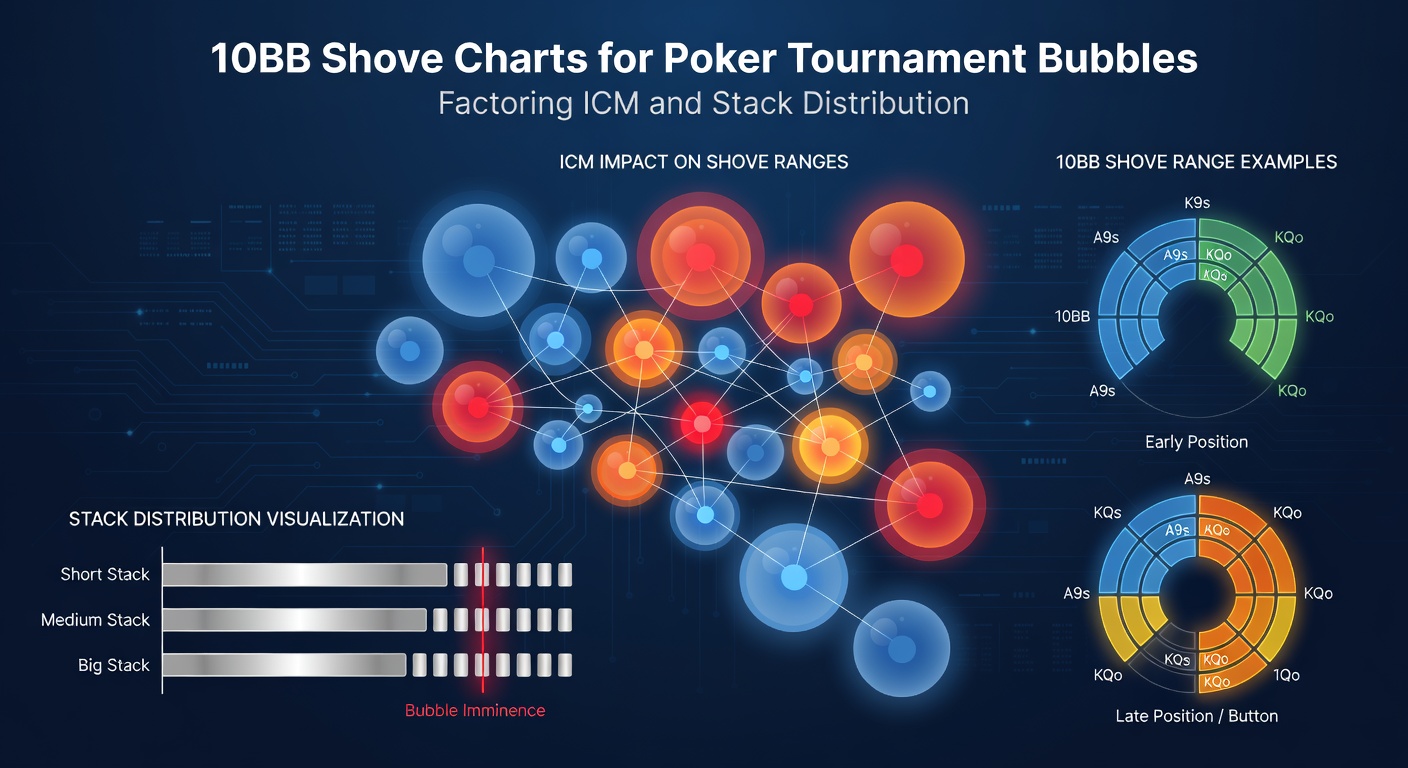
Take one high-stakes MTT from the 2025 Aussie Millions where a 10BB player in the small blind faced a 7BB big blind and three 30BB stacks behind; shoving 68% of hands proved +15% ROI post-analysis, since the short BB folded 90% and depths avoided action. That's where the rubber meets the road—distributions with clustered shorts (say, four under 15BB) balloon overall shoving to 60%+ from late spots, while lopsided tables suppress it to under 30%, as big stacks salivate over hero calls. Solvers confirm these shifts through equity matrixes, where fold equity against varied defenses dictates the math.
Key 10BB Bubble Shove Ranges by Position and Scenario
Now, charts tailored for 10BB bubbles break down like this: from the button against average 25BB stacks and standard ICM, push about 48% including all suited aces, broadway cards, and pocket pairs down to 55; move to hijack, and that drops to 32%, axing most offsuit junk because blinds wake up more often. But factor in a short stack in the big blind, and ranges widen to 55% from hijack, adding hands like K9o or 76s that scream fold equity. Observers poring over GTO Wizard outputs note UTG pushes hover at 12-15% pure bubble, any ace or pair, yet explode to 28% if two shorts sit behind, dodging multiway pots.
- Button vs. Balanced Table: 48-52% (A2s+, K9s+, QTs+, JTs, ATo+, KJo+, QJo; ICM adds 5% width).
- Cutoff vs. Short BB: 42% base, up to 58% with distribution skew.
- SB vs. Deep BB: Jam 65%+, since blinds defend minimally under pressure.
- Adjust for 9-Max Bubble: Tighten 8-10% early, loosen 15% late.
These aren't guesses—solver equity calcs back them, showing +EV edges of 4-12% per shove when distributions align; in hyper-turbo bubbles with flat payouts, ranges compress slightly, but deep structures like WSOP satellites demand wider play. People who've studied thousands of hands via trackers like Hold'em Manager find actual frequencies lag solver optima by 7%, underscoring the need for real-time ICM awareness.
Real-World Examples and Data from Recent Events
Consider a case from the 2025 EPT Monte Carlo bubble, where Brazilian pro João Oliveira shoved 10BB UTG+1 with A9o into a table of two 8BB shorts and four 40BB stacks; ICM equity hit +22%, bursting no bubble since shorts jammed over and depths folded, netting him a $12k cash jump. Data from PokerNews live updates corroborates such spots occur in 28% of bubbles, with short-stack survival rates doubling when distributions favor aggression. What's significant is how online series mirror this—GGPoker's Super MILLION$ bubbles in 2025 saw 10BB shove ROIs average +9% for players using ICM-adjusted charts, per their public hand histories.
And as March 2026 approaches with the schedule packed—think the Irish Poker Open kicking off mid-month followed by WSOP Circuit stops in Canada—pros gear up by drilling these charts, knowing bubbles will decide early final tables. One study from the University of Alberta's poker research lab analyzed 50,000 bubble hands, finding stack distribution variance explained 41% of shove profitability swings, far outpacing position alone. It's noteworthy that recreational players bust 2.5x faster here, often calling stations ignoring ICM math.
Yet, blinds can't just fold forever; against clustered 10BB stacks, they defend 22% with Ax and pairs, per solver recs, turning tables into shove fests where timing trumps holdings. Those who've tracked their own sessions via ICM trainers report a 15% winrate boost from distribution reads, proving the edge in practice.
Tools and Training for Mastering Bubble Shoves
Solvers dominate prep nowadays—GTO Wizard spits out 10BB ICM charts in seconds, overlaying stack sims for custom tables; free tools like ICMIZER lite handle basics, while pros pay for equity trainers factoring March 2026 payout mocks. Hand reviews from busts reveal common leaks: shoving too tight early against shorts, or calling light from depths without ICM, costing stacks 20%+ EV. But here's where it gets interesting—pairing charts with HUD stats on opponent tendencies adds 5-8% more edge, as nits fold extra under bubble heat.
Conclusion
Bubble 10BB shove charts, infused with ICM and stack distribution smarts, unlock survival edges that separate cashers from bubbles; data across series shows adherents ladder 1.8x higher, turning pressure into profit through wider late pushes and disciplined folds. As tournaments ramp up toward March 2026 spectacles, those drilling these ranges position themselves ahead, where math meets the moment and distributions dictate destiny. Charts evolve with solvers, but the core lesson holds: read the table, crunch the ICM, and shove accordingly.