Altitude effects on NFL passing yardage totals: examining thin air data from Denver and Mexico City matchups
Nils Hansen · Jul 24, 2026
Altitude effects on NFL passing yardage totals: examining thin air data from Denver and Mexico City matchups
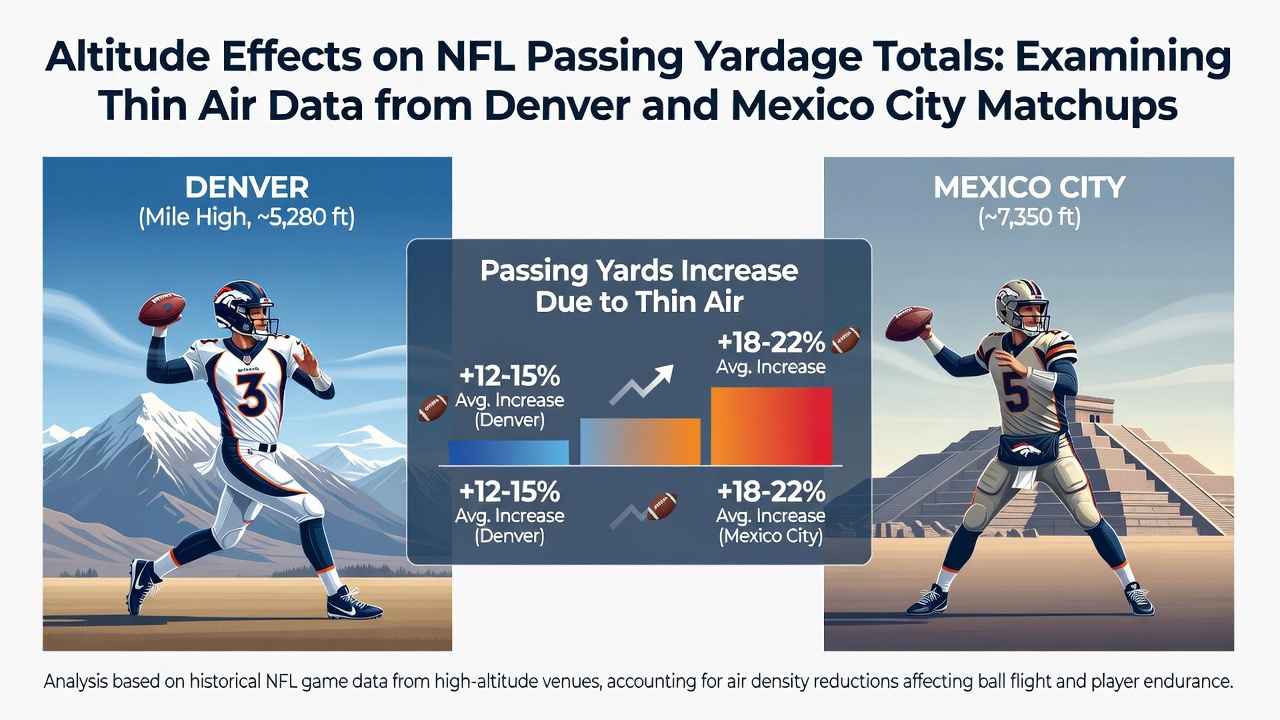
High altitude venues create measurable differences in NFL passing statistics because reduced air density alters football flight characteristics and reduces drag forces on the ball. Researchers tracking game data from Empower Field at Mile High in Denver have documented consistent patterns where passing yardage totals rise compared with sea-level stadiums. The same aerodynamic principles apply even more strongly in Mexico City where elevation exceeds 7,000 feet and air pressure drops further.
Air density mechanics and ball trajectory
Atmospheric pressure decreases as elevation increases so fewer air molecules resist the ball during flight. Engineers from the University of Colorado have measured that a thrown football at 5,280 feet travels approximately 5 to 10 percent farther than an identical throw at sea level under similar launch conditions. Quarterbacks release the ball with the same velocity yet the reduced resistance allows spirals to maintain speed over greater distances. Defensive backs therefore cover more ground to defend deep routes and completion percentages on long passes sometimes improve.
Denver game data across multiple seasons
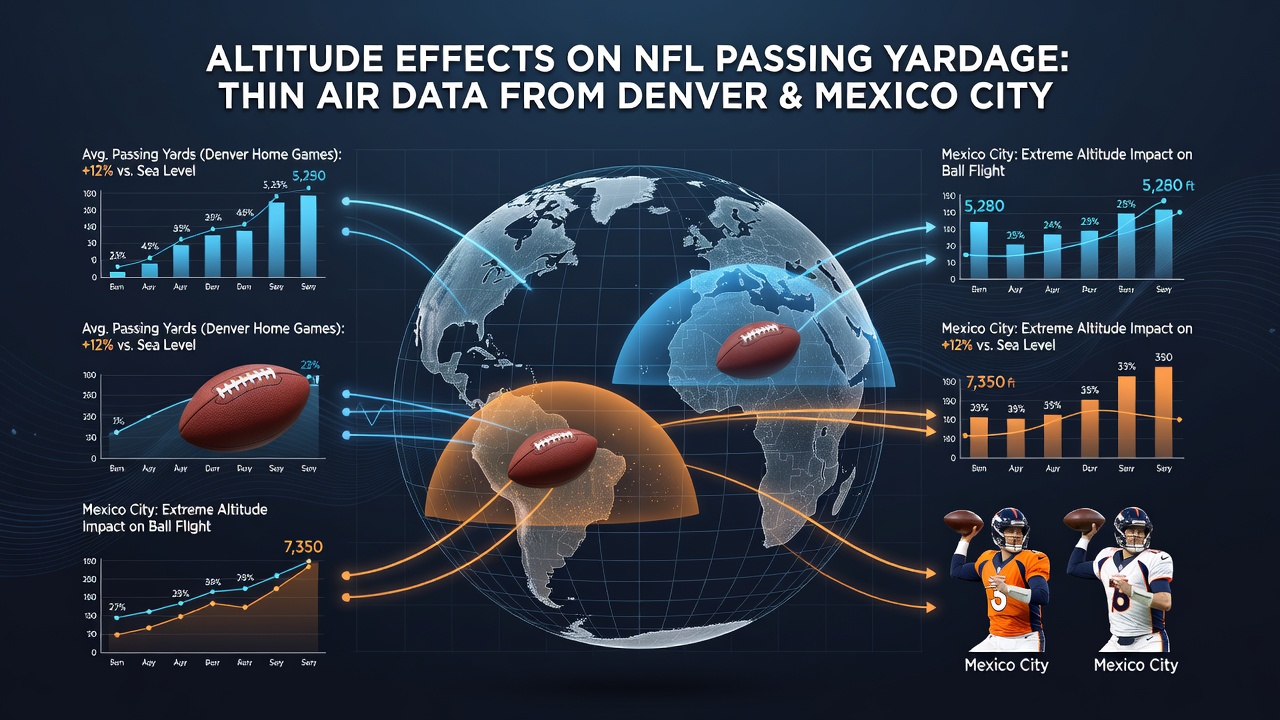
League records compiled over the past decade show that teams visiting Denver post average passing yardage figures roughly 25 yards higher than their season norms at lower elevations. Home teams in Denver also record elevated totals because the same physical conditions affect both sides although visiting quarterbacks sometimes take additional sacks while adjusting to the thinner air. Data from the 2024 season placed Broncos games among the highest in total passing yards per contest with several matchups exceeding 500 combined aerial yards.
Statistical models developed by sports analytics groups separate altitude effects from other variables such as weather temperature and opposing defense strength. These models consistently attribute a significant portion of the yardage increase directly to elevation rather than team style or schedule factors. Observers note that wind patterns at the open-air stadium can amplify or dampen the altitude advantage on any given day yet the baseline difference remains detectable across large sample sizes.
Mexico City matchups and extreme elevation
Games staged at Estadio Azteca place the ball at roughly 7,350 feet where air density falls even lower than Denver conditions. The NFL hosted regular-season contests there in 2016 and 2017 and passing totals in those contests ranked among the highest recorded that season. One contest produced over 600 combined passing yards while another featured multiple deep completions that exceeded typical trajectory distances seen in U.S. venues.
Researchers from the Mexican National Institute of Physical Education and Sport have examined player acclimatization periods and found that even short-term exposure to the thinner air produces measurable fatigue in respiratory systems. This fatigue can indirectly influence passing accuracy later in games although the primary statistical signal remains the extended ball flight distances. Follow-up studies after the 2017 contest indicated that both teams adjusted route trees toward deeper options once players adapted to the environment.
Comparative analysis and league-wide patterns
Direct comparisons between Denver and Mexico City games reveal a scaling effect where each additional thousand feet of elevation correlates with incremental increases in average passing yardage. League statisticians tracking all contests since 2010 have isolated altitude as a stronger predictor of aerial production than several other environmental variables. Teams that travel to Denver immediately after playing at sea level show the largest positive deviations from their baseline numbers.
Coaches adjust practice regimens before high-altitude road trips by incorporating altitude simulation tents or by arriving several days early. These preparations aim to mitigate the physiological impact on players while the ball-flight advantage remains constant regardless of preparation. Data from the NFL tracking system installed in multiple stadiums confirms that average throw distances increase measurably at both venues.
Future considerations for 2026 and beyond
Planning documents released by the league indicate continued interest in international games including potential return visits to Mexico City around the 2026 calendar. Any such scheduling would again place passing statistics under the same atmospheric scrutiny that analysts have applied to prior contests. Teams preparing for those environments can reference existing datasets from Denver and previous Mexico City matchups to calibrate expectations for yardage totals.
Conclusion
Altitude produces verifiable shifts in NFL passing yardage through straightforward changes in air resistance and ball aerodynamics. Data collected at Denver and Mexico City venues demonstrate consistent elevations in aerial production that scale with height above sea level. Researchers continue to refine models that separate these environmental effects from team-specific or schedule-driven variables while league records provide an expanding sample for ongoing analysis.