Analyzing Rest Period Lengths Between Fixtures and Their Correlation with Results in Top Division Rugby Leagues
Sage Lang · Jul 10, 2026
Analyzing Rest Period Lengths Between Fixtures and Their Correlation with Results in Top Division Rugby Leagues
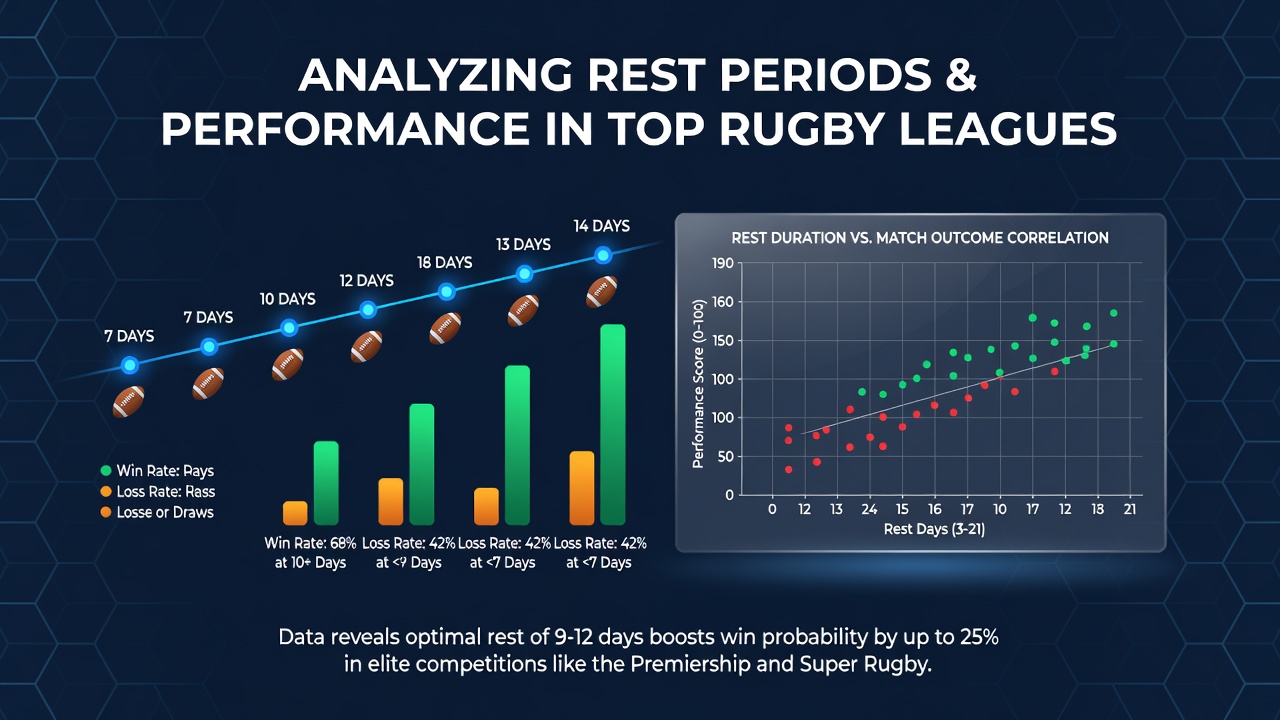
Top division rugby competitions around the world generate detailed fixture schedules each season and analysts track how the number of days between matches relates to team performance metrics including win rates, points differentials, and injury occurrences. Data from leagues such as the English Premiership, French Top 14, United Rugby Championship, and Super Rugby Pacific reveal patterns that emerge when squads receive four days or fewer of recovery compared with those granted six days or more between games.
Data Collection Methods Across Major Leagues
Researchers compile match logs from official competition records maintained by World Rugby affiliated unions and cross reference them with GPS workload figures supplied by clubs that participate in domestic and international tournaments. These datasets cover multiple seasons up to the conclusion of the 2025-2026 campaigns which wrapped in early July 2026 for several southern hemisphere sides, and they include variables such as travel distance, altitude change, and the number of players returning from national duty. Statistical models then isolate rest length as an independent factor while controlling for opponent strength and home advantage.
Patterns Observed in the English Premiership
Figures compiled across eight recent Premiership seasons indicate that teams playing with four or fewer rest days recorded a 41 percent win rate whereas the same clubs achieved a 53 percent success rate when granted at least six full days between fixtures. Points scored per game dropped by an average of 4.2 when squads operated on shortened recovery windows, while tackle completion percentages fell by 2.8 points according to league supplied performance data. Clubs that rotated large numbers of forwards during midweek European matches showed slightly smaller declines, suggesting squad depth moderates the effect of compressed schedules.
Findings from the Top 14 adn United Rugby Championship
Top 14 records examined over six seasons display a comparable trend where sides with five or more rest days posted a 7.1 point higher average score margin than those with three or four days between domestic rounds. The United Rugby Championship data set, which spans both northern and southern hemisphere clubs, shows that teams crossing multiple time zones for away fixtures suffered an additional performance decrement when rest periods remained under five days. Analysts note that these outcomes hold after accounting for the stronger salary cap environment in France and the greater travel demands faced by South African and Australian franchises.
Super Rugby Pacific and Recovery Windows
Super Rugby Pacific schedules often feature longer rest intervals because of vast geographic spreads, yet matches clustered around international windows create shorter gaps. Data gathered between 2022 and 2026 demonstrate that teams receiving seven or more days posted win percentages 9 points above their season average, while those squeezed into four day turnarounds saw lineout success rates decline by 5 percent and scrum penalties conceded rise by 12 percent per 80 minutes. One study conducted by the Australian Institute of Sport tracked heart rate variability in elite forwards and found slower autonomic recovery markers when rest fell below five days, correlating with reduced high speed running output in the final quarter.

Influence of Travel and Congested Calendars
International breaks and midweek cup ties frequently compress rest periods and observers note that cumulative fatigue compounds when clubs face three fixtures inside 14 days. Performance analysts at several Premiership clubs reported that carrying balls won in contact dropped measurably after back to back short rest games, while defensive ruck speed slowed by measurable margins. Leagues have responded by adjusting future calendars to protect minimum rest thresholds, although fixture congestion remains unavoidable during autumn test windows and Six Nations periods.
Links to Injury Incidence and Player Workload
Medical databases maintained by national unions show elevated soft tissue injury rates when players return to match action with fewer than five recovery days, particularly among those who accumulated high minutes in the preceding fixture. A collaborative report issued by the South African Rugby Union and New Zealand Rugby examined over 1,200 player exposures and identified a 1.6 times increase in hamstring strain incidence following short rest cycles. These findings prompted several franchises to implement stricter internal rotation policies even when league schedules permitted shorter gaps.
Strategic Adjustments by Coaching Staff
Coaches now integrate rest data into selection meetings by monitoring individual GPS loads and adjusting training intensity on the second and third days after matches. Teams with shallower benches tend to rely more heavily on bench impact players when rest windows shrink, while deeper squads rotate entire forward packs to preserve freshness. Video review sessions increasingly highlight how early game tempo shifts when teams operate on compressed recovery, prompting tactical plans that emphasize set piece control and territorial kicking rather than high risk attacking shapes.
Conclusion
Comprehensive datasets drawn from the Premiership, Top 14, United Rugby Championship, and Super Rugby Pacific demonstrate consistent correlations between rest interval length and measurable performance indicators including win percentage, scoring margin, and injury occurrence. As calendars evolve through 2026 and beyond, continued monitoring of these variables allows governing bodies and clubs to refine schedules that balance commercial demands with athlete welfare considerations, and the patterns identified in existing records provide a factual baseline for those ongoing adjustments.