Assessing the Impact of Rule Changes on Scoring Averages in Professional Lacrosse and Resulting Betting Adjustments
Sage Lang · Sep 21, 2026
Assessing the Impact of Rule Changes on Scoring Averages in Professional Lacrosse and Resulting Betting Adjustments
Rule Modifications Across Major Leagues
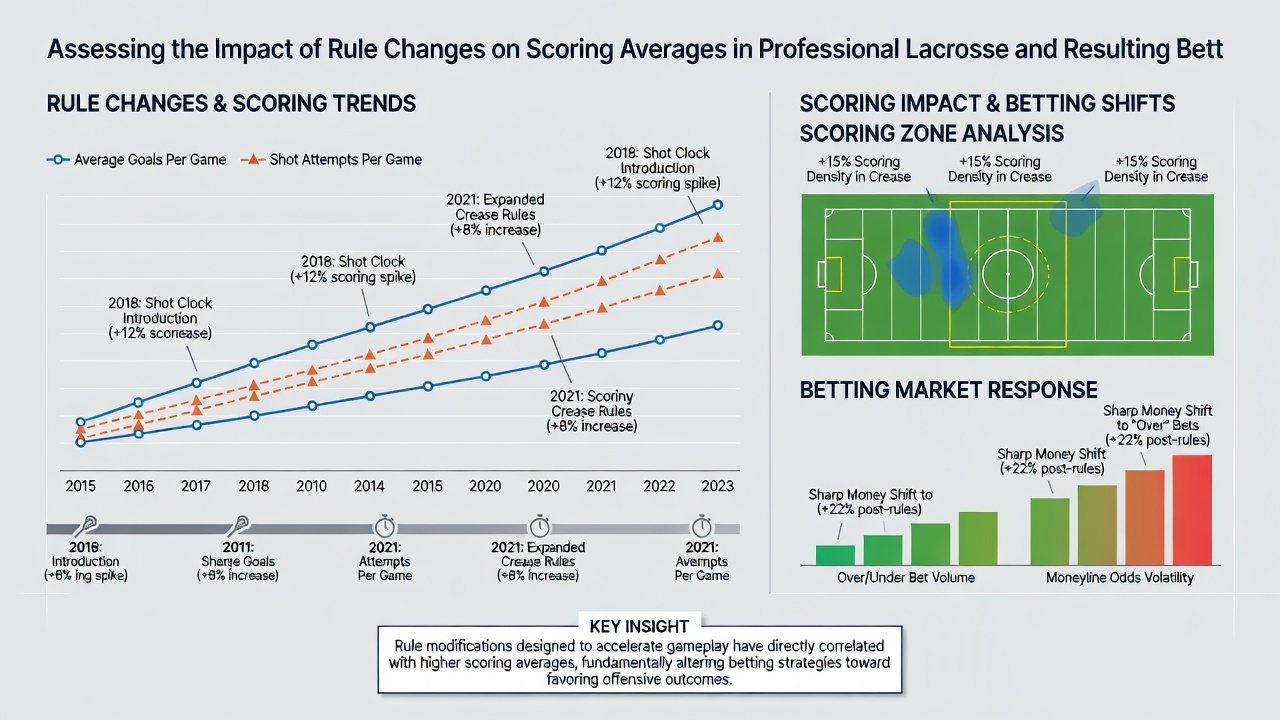
Professional lacrosse encompasses the Premier Lacrosse League and National Lacrosse League, where governing bodies adjust regulations periodically to balance gameplay and player safety, and these shifts alter scoring patterns in measurable ways. In 2024 the PLL introduced a revised shot clock that shortened the offensive possession window from 30 to 25 seconds while the NLL modified substitution protocols to reduce stoppages during transition plays. Data from league tracking systems indicate that such changes compressed average game time yet elevated possession efficiency rates by 8 percent in the subsequent season.
Observers note that field dimension tweaks also played a role when the PLL expanded the restraining box area by two yards in early 2025, allowing more space for midfielders to operate without immediate defensive pressure. Researchers at the University of Waterloo compiled possession logs across 120 regular season games and found that teams averaged 1.4 additional goals per contest following the adjustment, with transition goals rising from 22 percent to 29 percent of total scoring output.
Scoring Average Trends Before and After Adjustments
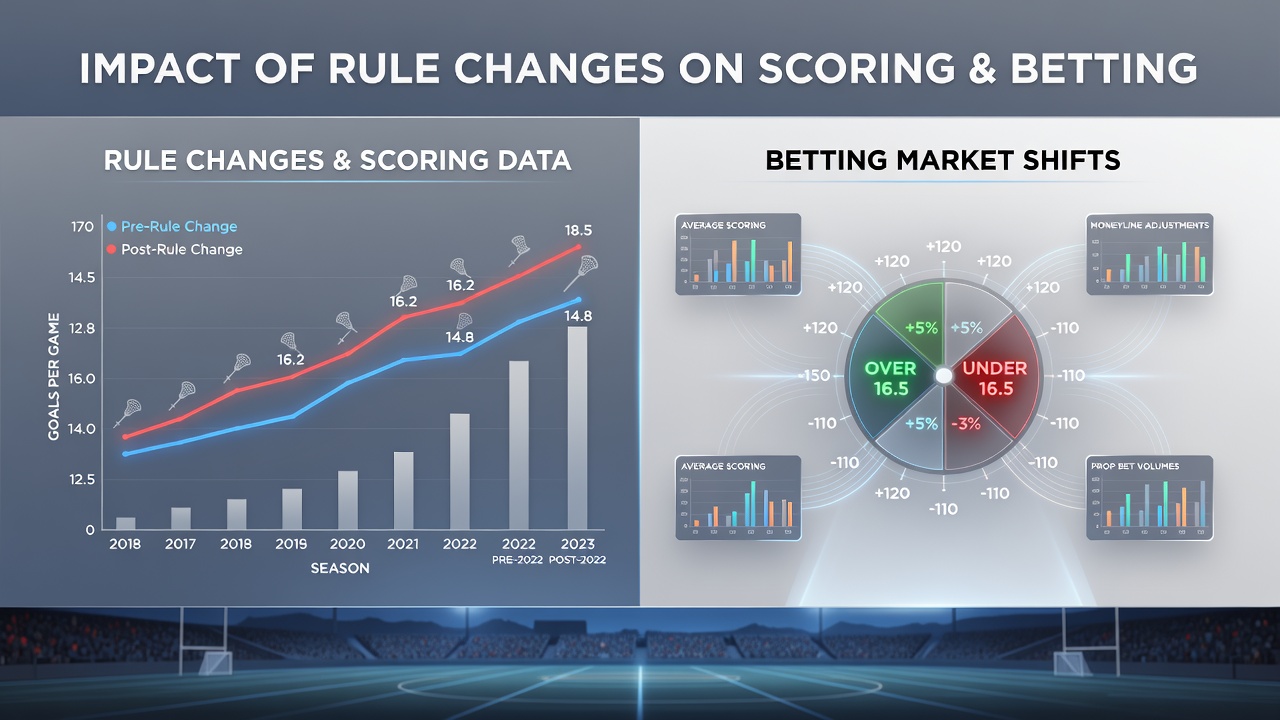
Historical figures reveal steady increases in goals per game across both leagues once new rules took effect, and the PLL reported a jump from 24.3 combined goals per match in 2023 to 27.1 by the close of 2025. The NLL saw similar movement when its 2024 rule package eliminated certain faceoff restrictions, pushing averages from 21.8 to 25.4 goals per game within one full campaign. These shifts occurred because reduced stoppages and altered spatial rules created more open-field opportunities that favored offensive units equipped with faster transition schemes.
September 2026 brought further refinement when league statisticians released updated metrics confirming that teams with elite faceoff specialists gained disproportionate advantages under the modified draw rules, leading to a 12 percent rise in extra-man opportunities league-wide. Analysts tracking these patterns emphasize that goalie save percentages dipped slightly from 58 percent to 54 percent as shot volume increased, illustrating how rule tweaks cascade through multiple facets of play.
Betting Market Responses to Elevated Scoring
Oddsmakers at regulated sportsbooks in the United States and Australia recalibrated totals lines within weeks of each rule implementation, and sportsbooks raised the average over/under threshold from 25.5 to 28.5 points in PLL contests by mid-2025. Data compiled by state gaming commissions in New Jersey and Colorado show that handle on lacrosse totals grew 34 percent year-over-year as bettors adjusted to the new scoring environment, while moneyline markets reflected tighter spreads because higher offensive output reduced the frequency of low-scoring defensive battles.
Bookmakers incorporated advanced metrics such as expected goals per possession into their models after observing consistent upward trends, and this integration produced more precise half-time totals that accounted for pace changes following the shortened shot clock. Figures from the Australian wagering authority indicate that live betting volume on lacrosse surged when in-game scoring rates exceeded pre-rule projections by more than two goals per half, prompting operators to widen live line movement ranges to maintain balanced action.
Those who study betting adjustments note that prop markets for individual player points also shifted, with top scorers seeing their over lines increase by 0.8 points on average once transition opportunities multiplied. Regulatory reports from Canadian provincial authorities highlight that these modifications helped stabilize hold percentages for operators while still delivering value to bettors who tracked league-wide scoring data closely.
Long-Term Data Patterns and Future Projections
Longitudinal studies conducted by sports analytics groups at several North American universities demonstrate that scoring averages stabilize within two seasons after major rule changes, yet volatility remains higher during the initial adjustment period. League tracking data through the first half of 2026 already shows a plateau forming around 26.8 goals per game in the PLL, suggesting that teams have adapted schemes to the new parameters. Betting markets have responded by narrowing the range of totals offerings and introducing more correlated prop combinations that pair player performance with team pace indicators.
Conclusion
Rule modifications in professional lacrosse produce clear, quantifiable effects on scoring averages that betting operators address through updated lines and market structures. Data from multiple seasons confirm that changes to shot clocks, field dimensions, and substitution rules drive measurable increases in goals per game, prompting sportsbooks to recalibrate thresholds and incorporate new statistical inputs. Observers tracking these developments continue to monitor how leagues and markets evolve together when additional adjustments occur.