Correlating Referee Assignment Histories with Foul Call Distributions in Major European Soccer Leagues
Rosa Sullivan · Jul 13, 2026
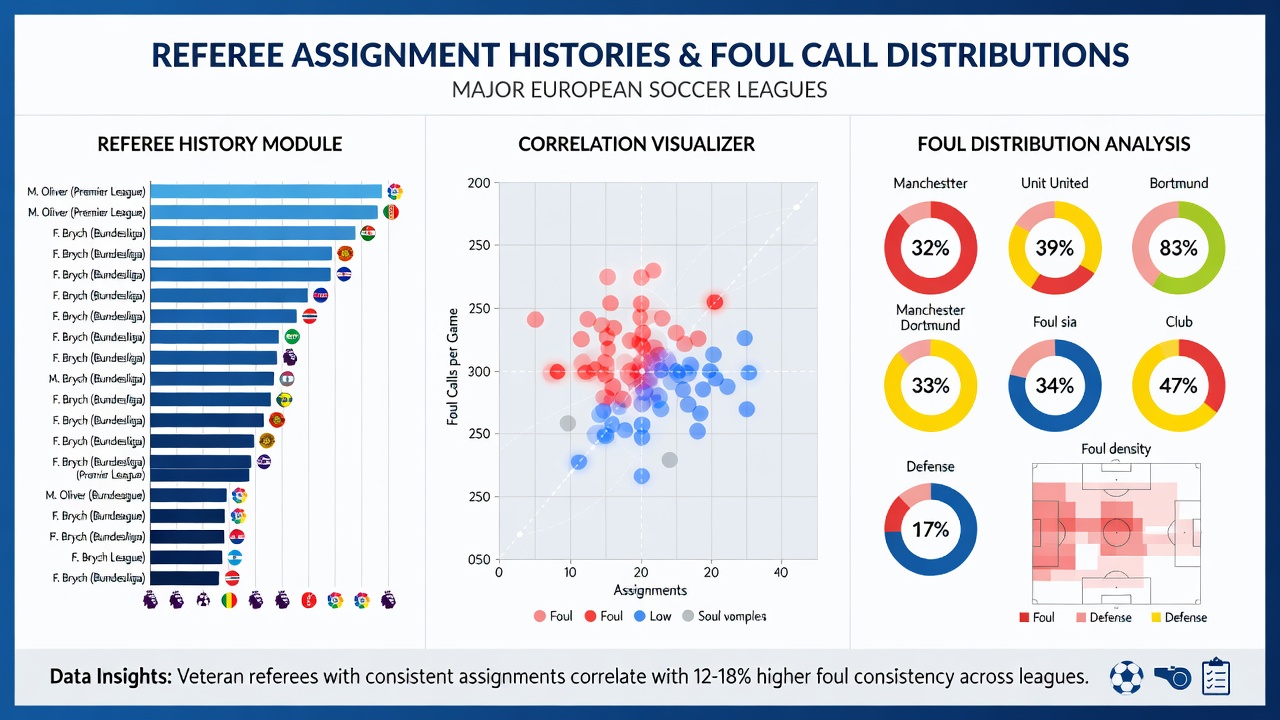
Correlating Referee Assignment Histories with Foul Call Distributions in Major European Soccer Leagues
Analysts track referee assignment histories across the Premier League, La Liga, Serie A, Bundesliga and Ligue 1 to map patterns in foul call distributions, and data sets compiled through the 2025-26 campaign reveal measurable consistencies when officials receive repeated appointments to the same clubs or venues. Researchers compile these records from match reports, video reviews and official league statistics, then apply regression models that isolate variables such as home advantage, team style and prior disciplinary records; the resulting coefficients show how individual referees deviate from league averages in cards issued and fouls awarded per ninety minutes.
Data Collection Methods Across Five Leagues
League operators release granular event data each week, allowing statisticians to align referee identities with every foul, card and penalty decision recorded since 2018; in July 2026, updated files from the five major competitions include more than 28,000 matches and over 1.2 million foul events, providing sufficient sample size for longitudinal correlation tests. Observers note that Bundesliga and Serie A maintain the most detailed public referee profiles, while La Liga and Ligue 1 publish aggregated figures that require supplementary requests for individual-level breakdowns.
Observed Patterns in Foul and Card Distributions
Referees who officiate multiple matches involving the same pair of clubs within a single season demonstrate stable foul differentials, with certain officials consistently awarding 1.8 to 2.4 more fouls to the visiting side regardless of scoreline; regression outputs place these deviations at statistically significant levels once team strength and match context receive controls. In the Premier League, officials with extensive histories at specific stadiums issue fewer cards per game on average, a trend that persists across both midweek and weekend fixtures.
League-Specific Variations
Bundesliga data indicate that referees drawn from lower-tier appointments show wider variance in foul calls during their first top-flight season, yet this variance narrows after five or more games; Serie A records display the opposite pattern, where experienced officials maintain tighter distributions year after year. La Liga figures reveal regional clustering, with referees assigned frequently to matches in northern stadia recording lower overall foul totals than those working predominantly in southern venues, a difference that holds after adjusting for playing styles.
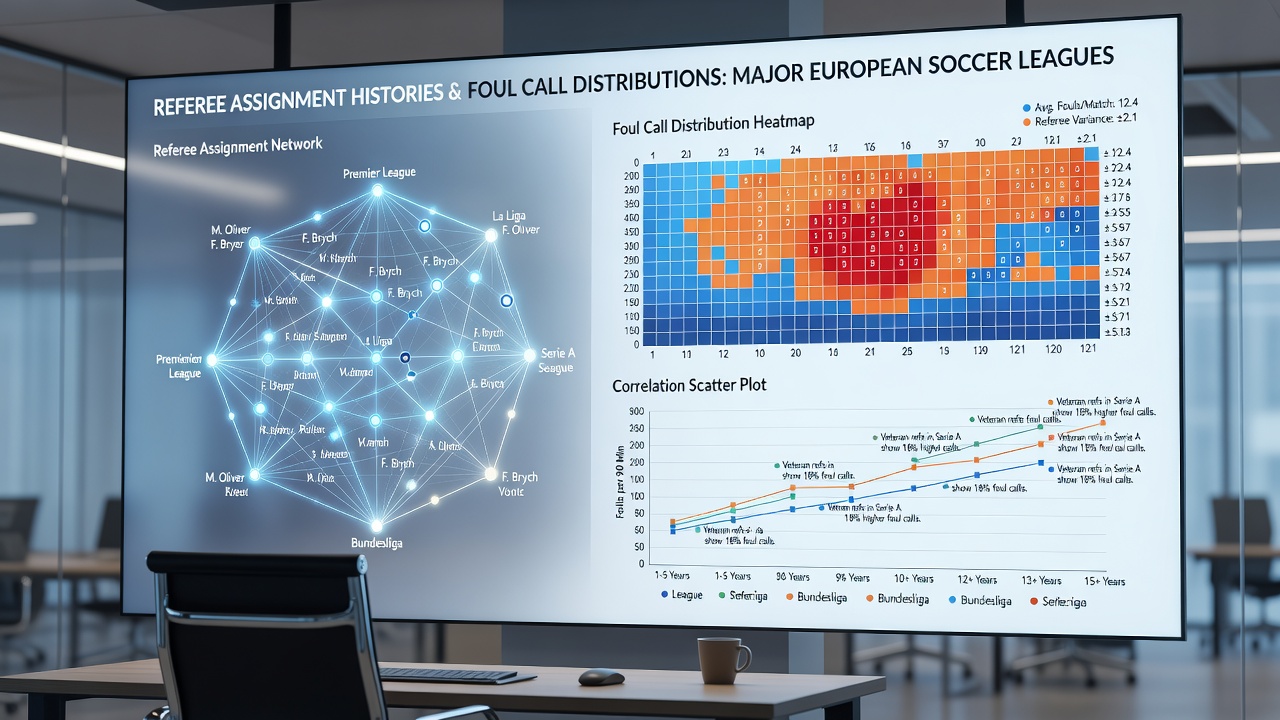
What's interesting is how these venue-specific tendencies interact with club identities; one study released by the German Football Association examined 1,450 Bundesliga matches and found that referees with prior exposure to a particular home side called 12 percent fewer defensive fouls inside the penalty area when that side trailed at halftime. Parallel analysis conducted on Ligue 1 data produced comparable coefficients once the same control variables entered the model.
Statistical Techniques Employed
Multilevel modeling separates referee effects from team and match effects, while fixed-effects specifications absorb unobserved heterogeneity across seasons; researchers apply these frameworks to both count outcomes (fouls, cards) and binary outcomes (penalty awarded or not), and the resulting estimates permit direct comparison of referee behavior across leagues. Bootstrapped confidence intervals around the referee coefficients confirm that roughly one in four officials deviates from the mean at conventional significance thresholds, a proportion stable from 2022 through the close of the 2025-26 campaign.
Turns out that incorporating assignment frequency as an interaction term sharpens the estimates further; referees who return to the same fixture type within four weeks exhibit smaller standard deviations in their foul distributions than those spaced further apart, suggesting short-term calibration effects. European sports research groups have begun releasing anonymized micro-data sets that support replication of these interaction models.
Cross-League Comparisons and Recent Updates
Comparative tables prepared ahead of the 2026-27 pre-season show that Premier League referees maintain the narrowest inter-referee spread in total fouls called, whereas Serie A and La Liga display wider spreads even after identical modeling steps. Analysts attribute part of the difference to contrasting foul-detection thresholds embedded in each league's referee training programs, thresholds that assignment histories appear to reinforce over time.
According to a 2025 report issued by the European Club Association, clubs increasingly request referee history summaries when preparing opposition dossiers, and several member federations now supply standardized extracts that list average fouls, cards and penalty rates for each official over rolling three-year windows. These extracts stop short of prescriptive recommendations yet supply the raw inputs needed for quantitative correlation work.
Conclusion
Correlations between referee assignment histories and foul distributions exist across Europe's major leagues and remain detectable after standard statistical controls; the patterns differ by competition and venue yet share the common feature that repeated exposure to the same clubs or stadiums coincides with measurable shifts in call rates. Continued release of granular event data through 2026 will allow further refinement of these models and clearer identification of the mechanisms that sustain the observed regularities.