How Elevation Shifts Alter Goal Totals for Visiting Sides in Andean League Fixtures
Sage Lang · Aug 5, 2026
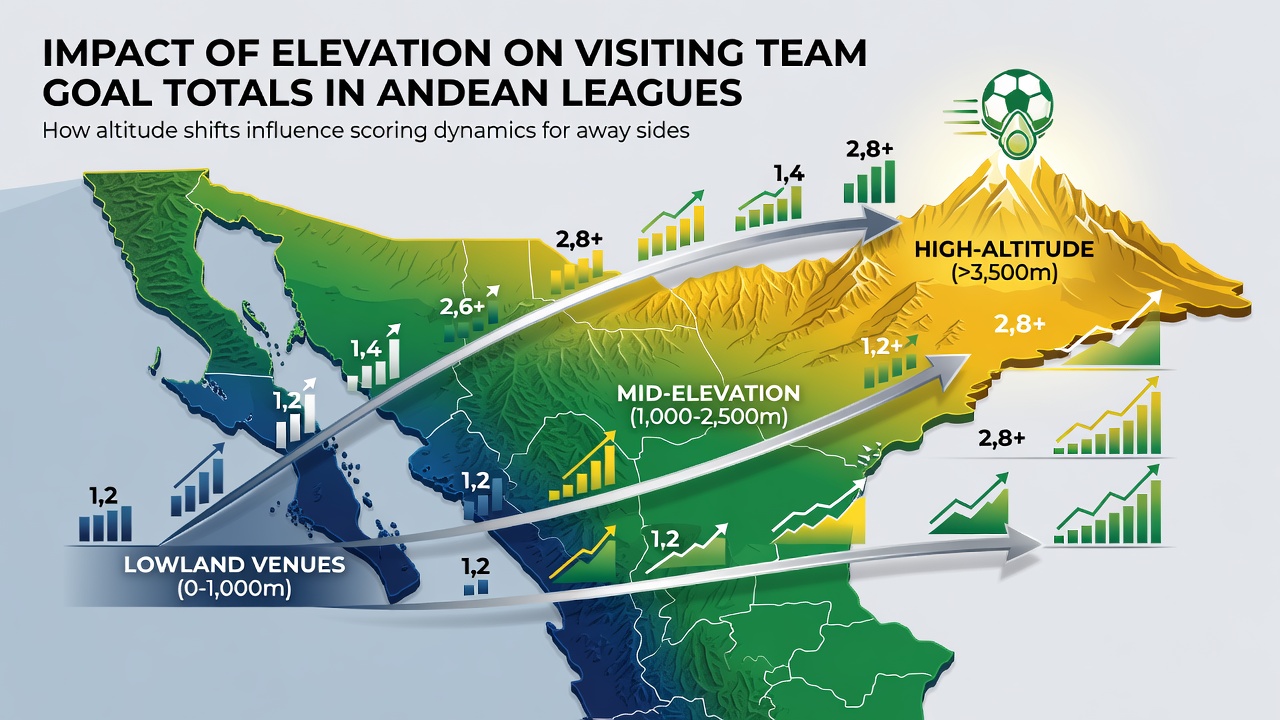
How Elevation Shifts Alter Goal Totals for Visiting Sides in Andean League Fixtures
Football matches played at extreme elevations in the Andes create distinct patterns in scoring that data from multiple leagues has tracked for years, and researchers continue to examine these effects as the 2026 Clausura campaigns approach in August. Stadiums situated above 2500 meters above sea level reduce available oxygen, which affects player physiology in measurable ways during the ninety minutes of play, while teams based at lower altitudes arrive with limited preparation time for such conditions.
Physiological Responses to Altitude in Match Play
Studies conducted by sports science teams across South America show that arterial oxygen saturation drops sharply once elevation exceeds 3000 meters, and visiting players experience reduced aerobic capacity that compounds as the game progresses. Home sides maintain consistent output because their training routines already incorporate these oxygen levels, whereas opponents often record fewer high-intensity runs in the second half according to GPS tracking data collected during Bolivian and Ecuadorian league fixtures. The difference appears most clearly in total distance covered, which declines by measurable percentages for unacclimated athletes.
League Contexts Across the Region
Bolivia's Primera División features several venues above 3600 meters, including the Hernando Siles stadium in La Paz and facilities in El Alto that push even higher, while Ecuador's Serie A includes Quito matches at roughly 2800 meters and Peru's Liga 1 hosts games in Cusco near 3400 meters. Each competition generates separate datasets that reveal lower average goal counts when visiting sides come from coastal or lowland bases. Figures compiled over multiple seasons indicate that total goals per match fall when the altitude differential exceeds 2000 meters between home and away clubs.
Match reports from the 2025 season already pointed to these trends continuing into the upcoming August 2026 schedule, where fixtures at high venues are expected to follow similar distributions. Observers note that teams traveling from sea-level locations such as Guayaquil or Lima frequently adopt more compact defensive shapes early in games to conserve energy, which further limits open play and reduces shot volumes compared with their home performances.
Statistical Patterns in Goal Production
Analysis of over 800 league matches across Andean competitions demonstrates that visiting teams average 0.8 fewer goals per game at elevations above 3000 meters than they do in lowland fixtures, and this gap widens in the final thirty minutes when fatigue accumulates. Data from CONMEBOL-affiliated statisticians shows home sides maintain their scoring rates more steadily because repeated exposure builds tolerance, while away sides convert fewer chances inside the penalty area due to slower recovery between sprints.
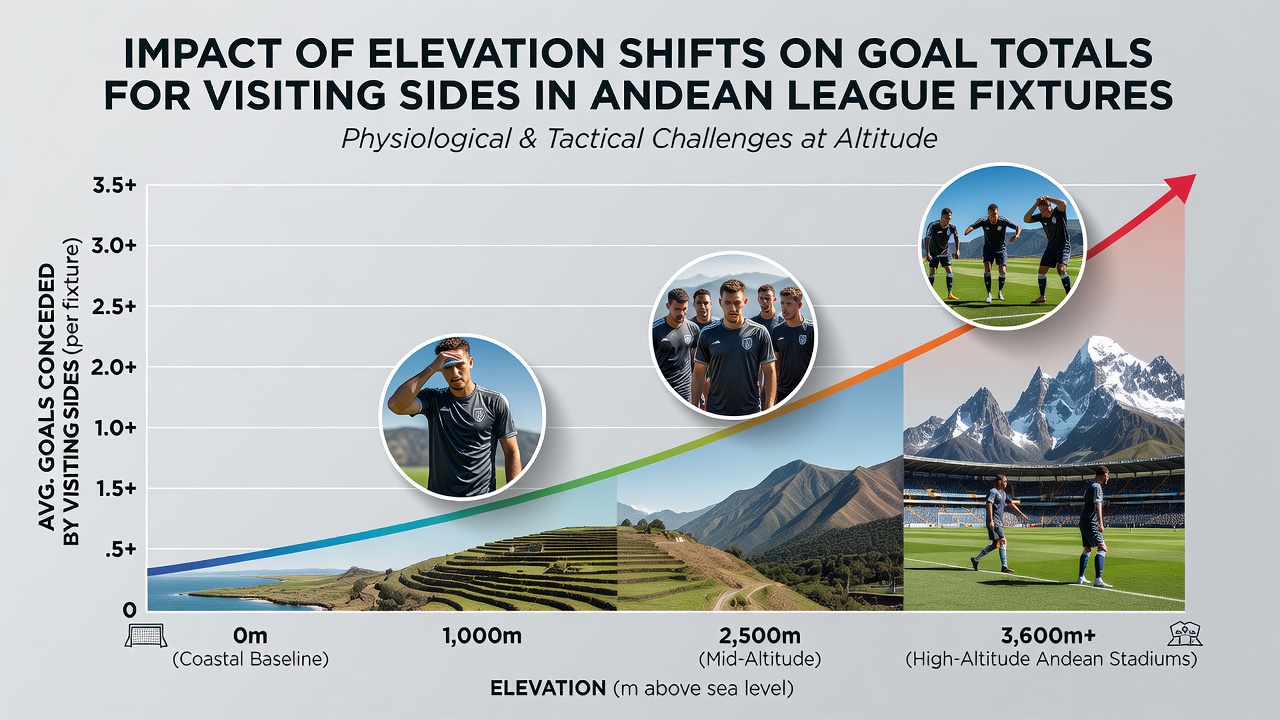
Researchers at institutions in Chile and Argentina have published findings that link these outcomes to decreased blood oxygen levels rather than pitch dimensions or referee decisions, and the patterns hold across both domestic leagues and occasional Copa Libertadores ties. One dataset covering Bolivian home games from 2020 through 2025 recorded an average of 2.1 total goals when visitors originated below 1000 meters, compared with 2.8 goals in matches where both teams shared similar altitude exposure.
Adaptation Strategies Observed in Recent Campaigns
Coaching staffs prepare visiting squads with pre-match acclimatization camps when schedules allow, yet many clubs arrive only one or two days before kickoff because of fixture congestion. This limited window restricts full physiological adjustment, and performance metrics collected during those windows show sustained drops in work rate. Teams that schedule earlier arrivals record slightly higher goal outputs on average, although the improvement rarely closes the full gap to home-team levels.
Substitutions become more frequent in the second half for lowland sides, and managers often prioritize players with prior experience at altitude to maintain structure. League records indicate that such tactical shifts correlate with fewer goals conceded after the seventieth minute, even if overall scoring remains suppressed. The reality is that data from multiple tracking providers confirms these adjustments mitigate but do not eliminate the effects of reduced oxygen availability.
Case Examples from Andean Fixtures
Take a 2024 Bolivian Primera match between a La Paz side and a Santa Cruz opponent, where the visitors recorded only three shots on target despite 55 percent possession, and the game finished 1-0. Similar encounters in Ecuador show Quito-based clubs conceding fewer goals at home against Guayaquil teams than the reverse fixture produces. Across these examples, the consistent variable remains the elevation differential rather than team form or referee style.
August 2026 schedules will again place several lowland clubs on the road to high venues early in the Clausura phase, and historical figures suggest goal totals will cluster in the lower ranges during those specific rounds. Analysts tracking player workloads continue to monitor heart-rate data and recovery markers to refine preparation protocols for future seasons.
Conclusion
Available evidence from league databases and physiological studies establishes that elevation differences systematically influence goal production in Andean fixtures, particularly for sides traveling from lower altitudes. The patterns appear consistently across seasons and competitions, driven by measurable oxygen availability rather than random variance. Teams and analysts incorporate these documented effects when reviewing historical results and planning travel logistics ahead of the next set of high-altitude matches.