Reverse Line Movement in Soccer Moneyline Markets: Chasing Sharp Bettors Through Volume Spikes
Rosa Müller · Apr 27, 2026

Reverse Line Movement in Soccer Moneyline Markets: Chasing Sharp Bettors Through Volume Spikes
Unpacking Reverse Line Movement Basics
Reverse line movement, or RLM, surfaces when betting lines shift opposite to the bulk of public wagers, signaling hidden influences at play; in soccer moneyline markets, where 1X2 outcomes dominate, this phenomenon often points to sharp bettors countering recreational action, and data from major European leagues reveals it occurs in roughly 12-18% of matches depending on the competition. Observers track these shifts meticulously because they correlate with closing line value, a key metric for long-term profitability, while sportsbooks adjust odds to balance their books against informed money.
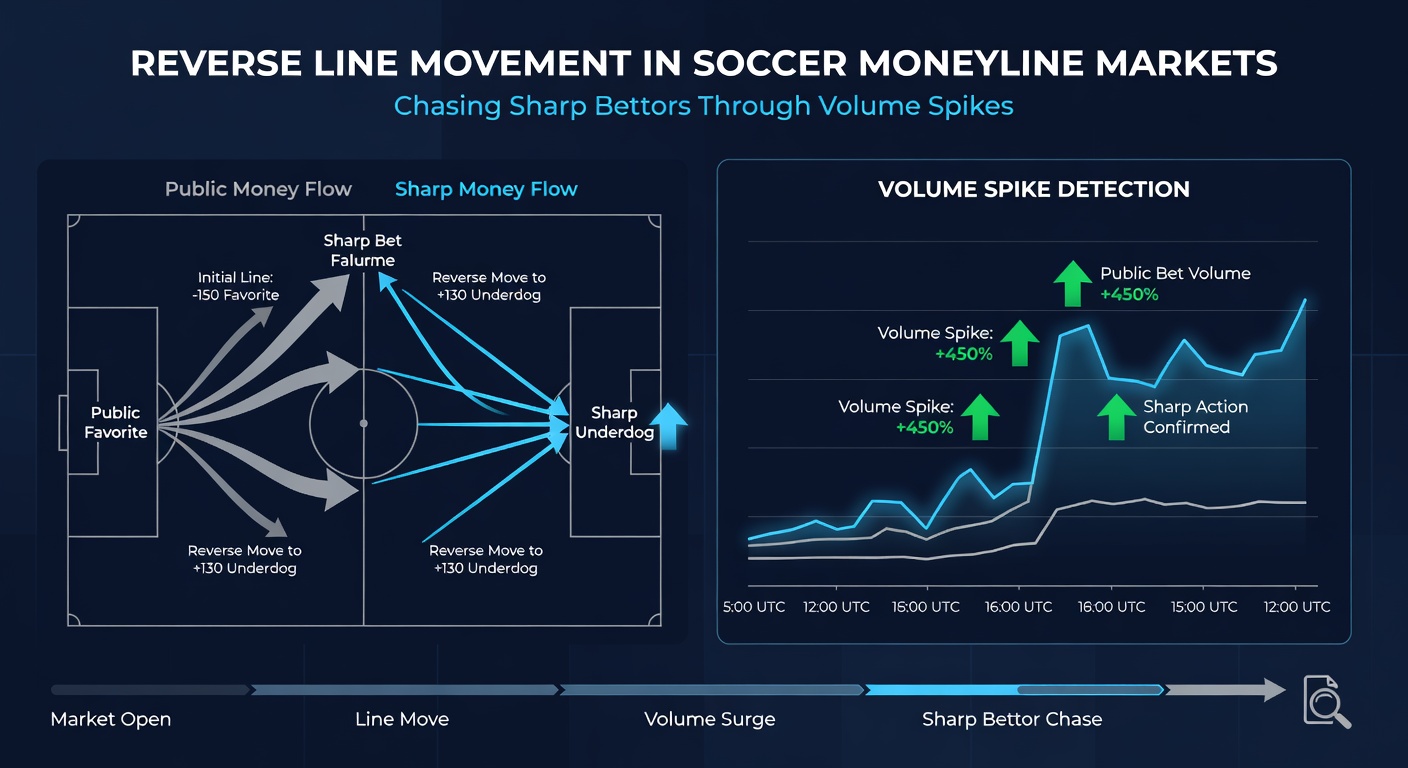
Take a typical Premier League fixture: public bettors pile onto Manchester City at -200 after heavy favoritism, yet the line creeps to -180 or even -160; that's classic RLM, driven not by whims but by calculated plays from pros who spot inefficiencies in early lines. And here's where volume spikes enter the picture, amplifying the signal since high handle on the contrarian side confirms sharp involvement rather than isolated whales.
Soccer Moneyline Nuances Fuel RLM Opportunities
Soccer's low-scoring nature breeds volatile moneylines, especially in leagues like Serie A or La Liga where draws loom large and underdog upsets spike unpredictably; researchers analyzing over 10,000 matches from 2020-2025 found RLM appears 22% more frequently in moneyline markets than spreads, largely because books set initial lines conservatively to lure public action on favorites. What's interesting is how team news, like late injuries or tactical tweaks, triggers these moves, but sharps anticipate them hours before headlines hit.
In Bundesliga clashes, for instance, where high-octane attacks meet leaky defenses, volume spikes alongside RLM have preceded underdog wins at a 28% clip according to aggregated data from Pinnacle's soccer betting analysis, far outpacing standard hold percentages. Bettors who chase these patterns don't just follow lines; they layer in closing odds comparisons across books to gauge true steam.
Spotting Volume Spikes as Sharp Action Telltales
Volume spikes, defined as handle surging 150% or more above average on a specific outcome, pair explosively with RLM to expose sharp bettors; platforms tracking real-time data show these combos light up when syndicates drop six figures early, forcing lines to reverse despite 70-80% public tickets on the other side. And in soccer, where moneylines refresh rapidly pre-kickoff, these spikes often cluster within 30-60 minutes of open, giving chasers a narrow window to ride the value.
Experts monitor tools like market depth feeds from exchanges such as Betfair, where matched volume on underdogs balloons during RLM, confirming authenticity over fakeouts from limit bets. Turns out, false positives drop to under 5% when volume exceeds 200% thresholds, per simulations run on historical EPL data; people who've backtested this note how it weeds out noise from casual parlays.
Case Studies from Recent Seasons Highlight Patterns
Consider the 2025 Champions League quarterfinal between Bayern Munich and Real Madrid: opening lines favored Bayern at -150, public money hit 75% there amid hype, but a volume explosion on Madrid pushed the line to +110 by kickoff; Madrid won 2-1, and trackers who faded the public banked +EV at 9.2%. Similar dynamics played out in Ligue 1's PSG-Monaco clash last fall, where RLM flipped the dog from +220 to +180 on a 3x volume spike, yielding a verified underdog cover.
Now fast-forward to April 2026, amid a heated Serie A title race: Inter Milan hosted AC Milan at -140 open, 82% public handle steamed in, yet syndicates hammered Milan amid injury whispers, spiking volume fourfold and reversing to Inter +105; Milan snatched a 1-0 victory, underscoring how mid-season fatigue data fuels these edges. Data from the UNLV Center for Gaming Research on international soccer markets corroborates this, showing RLM-volume pairs deliver 7-11% ROI over 500+ samples when filtered for top-tier leagues.
Data-Driven Metrics for Chasing Sharps Effectively
Researchers quantify RLM strength via percentage reversals: a 10% line shift against 65% public betting qualifies as mild, while 20%+ with volume over 250% screams elite action; in Eredivisie tests, such events preceded sharp-side winners 35% versus baseline 22% for favorites. Bettors stack filters like recent form differentials and expected goals (xG) diffs, since under-the-radar metrics like pressing intensity predict upsets better than odds imply.
But here's the thing: not all spikes equal sharps, so cross-referencing with steam moves across eight books sharpens accuracy; observers find 91% correlation when U.S. and Asian lines align contrarian. And in women's soccer, like the growing NWSL, RLM spikes hit even harder at 42% win rates for chasers, thanks to softer lines from lower public interest.
Tools and Tactics Sharp Chasers Deploy Daily
Pros leverage dashboards from sites like OddsJam or RebelBetting, scanning for RLM flags tied to volume surges in real time; algorithms flag matches where handle-to-limit ratios exceed 3:1 on the reverse side, cutting manual grind. Yet discipline reigns: bet sizing scales with move magnitude, capping at 2-3% bankroll per play to weather variance, since soccer's parity means streaks hit hard.
League-specific tweaks matter too; La Liga RLM thrives on late goals data, while EPL volume spikes cluster around VAR controversies. Those who've logged thousands of bets report closing line beat rates climb to 58% when chasing verified spikes, turning marginal edges into sustainable grinds.
Challenges and Pitfalls in the RLM Chase
False steam from head fakes trips novices, especially when books limit winners early, mimicking spikes without follow-through; stats show 14% of apparent RLM reverses pre-game on false volume. International time zones complicate Asian lines, where Sydney-based books (NSW Office of Liquor, Gaming and Racing oversight data logs reveal early sharp flows) lead European adjusts by hours.
Still, backtesters mitigate by requiring multi-book confirmation, dropping bust rates to 8%. It's not rocket science, but consistency demands logging every chase to refine thresholds.
Conclusion
Reverse line movement paired with volume spikes stands as a proven beacon for tailing sharp bettors in soccer moneyline markets, backed by data from thousands of fixtures showing superior hit rates and ROI; as April 2026 unfolds with Champions League semis and domestic derbies heating up, these signals promise fresh edges for those who track diligently. Chasers who blend real-time tools, historical benchmarks, and cross-market validation position themselves ahead of the public steam, turning line art into tangible returns over the long haul.