Session Segmentation Techniques for Roulette Wheel Bias Detection in European Wheels
Rosa Sullivan · Oct 19, 2026
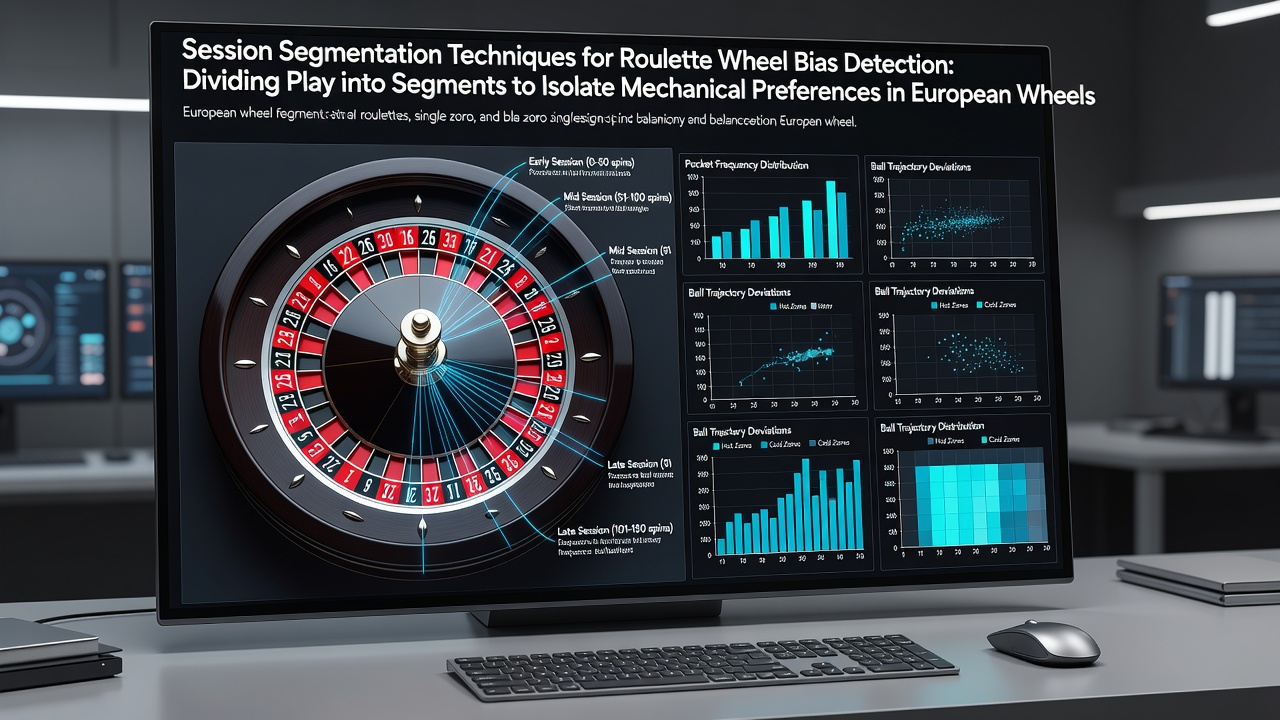
Session Segmentation Techniques for Roulette Wheel Bias Detection in European Wheels
European roulette wheels feature 37 pockets including a single zero, and operators track outcomes across thousands of spins to identify any mechanical preferences that deviate from expected randomness. Session segmentation breaks continuous play into defined blocks so analysts can compare results across those blocks and spot patterns tied to specific wheel conditions rather than overall distribution.
Mechanical Preferences and European Wheel Construction
European wheels use a single zero layout with pockets arranged in a fixed sequence, yet manufacturing tolerances, wear on the ball track, or slight imbalances in the rotor can create measurable preferences for certain numbers or sectors. Observers note that these preferences often remain stable within short periods but shift when environmental factors such as temperature or maintenance alter the wheel's behavior. Data from regulatory testing in multiple jurisdictions shows that bias detection improves when analysts avoid treating an entire session as one uniform sample.
Defining Segments for Isolation of Patterns
Analysts divide play into segments based on spin count, time intervals, or dealer changes rather than arbitrary cutoffs. A common approach sets each segment at 200 to 300 spins because this range balances statistical power with sensitivity to gradual mechanical drift. Time-based segments of 45 to 60 minutes serve the same purpose when spin rates vary, while segments tied to dealer rotation capture any influence from different throwing styles. Each segment receives its own frequency count for every pocket so that deviations appear as localized spikes instead of diluted averages.
Statistical Comparison Across Segments
Once segments exist, researchers apply chi-square tests and standard deviation calculations to each block independently before comparing results to adjacent blocks. Significant differences between segments point toward a mechanical preference that appears only under certain conditions, such as after several hours of continuous operation. Figures from large-scale wheel monitoring programs reveal that combining segment-level analysis with full-session totals reduces false positives by isolating transient effects from persistent rotor imbalances. Software tools record outcomes in real time and flag segments where any number exceeds its expected frequency by more than three standard deviations.

Implementation in Live Casino Environments
Casino surveillance teams and independent analysts apply these methods during routine integrity checks. They record every outcome through automated cameras or manual entry, then partition the data stream at predetermined intervals. One documented procedure divides an eight-hour monitoring period into four equal segments of roughly 1,200 spins each, allowing direct comparison of morning versus afternoon performance. When a segment shows elevated hits on a particular sector, technicians inspect the wheel for corresponding physical signs such as groove depth or ball deflection marks. This segmented review also helps distinguish between dealer signatures and true mechanical bias because dealer effects tend to shift with personnel changes while mechanical issues persist across multiple segments.
Integration with Regulatory Oversight
Regulatory bodies in several regions require periodic wheel testing that incorporates segmented analysis. The Nevada Gaming Control Board publishes guidelines that recommend dividing test sessions into at least three blocks to verify stability. Similar protocols appear in Australian gaming standards, where operators must demonstrate that any claimed bias remains consistent across segmented samples rather than appearing in a single aggregated dataset. These requirements encourage casinos to maintain detailed logs that support segment-by-segment verification during audits.
Limitations and Complementary Approaches
Session segmentation improves detection sensitivity yet cannot replace physical inspection or long-term tracking. Short segments may produce noisy data when the total spin count falls below statistical thresholds, and rapid wheel maintenance can reset any emerging bias between segments. Analysts therefore combine segmentation with other techniques such as sector mapping and ball trajectory recording. Research from the University of Sydney's gambling studies unit indicates that multi-method approaches yield higher confirmation rates for genuine mechanical preferences than segmentation alone. The same studies note that European wheels with low-friction ball tracks show fewer segment-to-segment shifts than older models, underscoring the importance of wheel age in analysis planning.
Conclusion
Segmenting play sessions allows precise isolation of mechanical preferences in European roulette wheels by converting continuous data into comparable blocks. This technique supports regulatory compliance, assists maintenance scheduling, and refines bias detection without relying on single aggregated statistics. Continued refinement of segment size and statistical thresholds keeps the method aligned with evolving wheel designs and monitoring technology.