Shifting Patterns in UFC Round Scoring: Fighter Cardio Metrics and Judge Tendencies Across International Cards
Rosa Sullivan · May 18, 2026
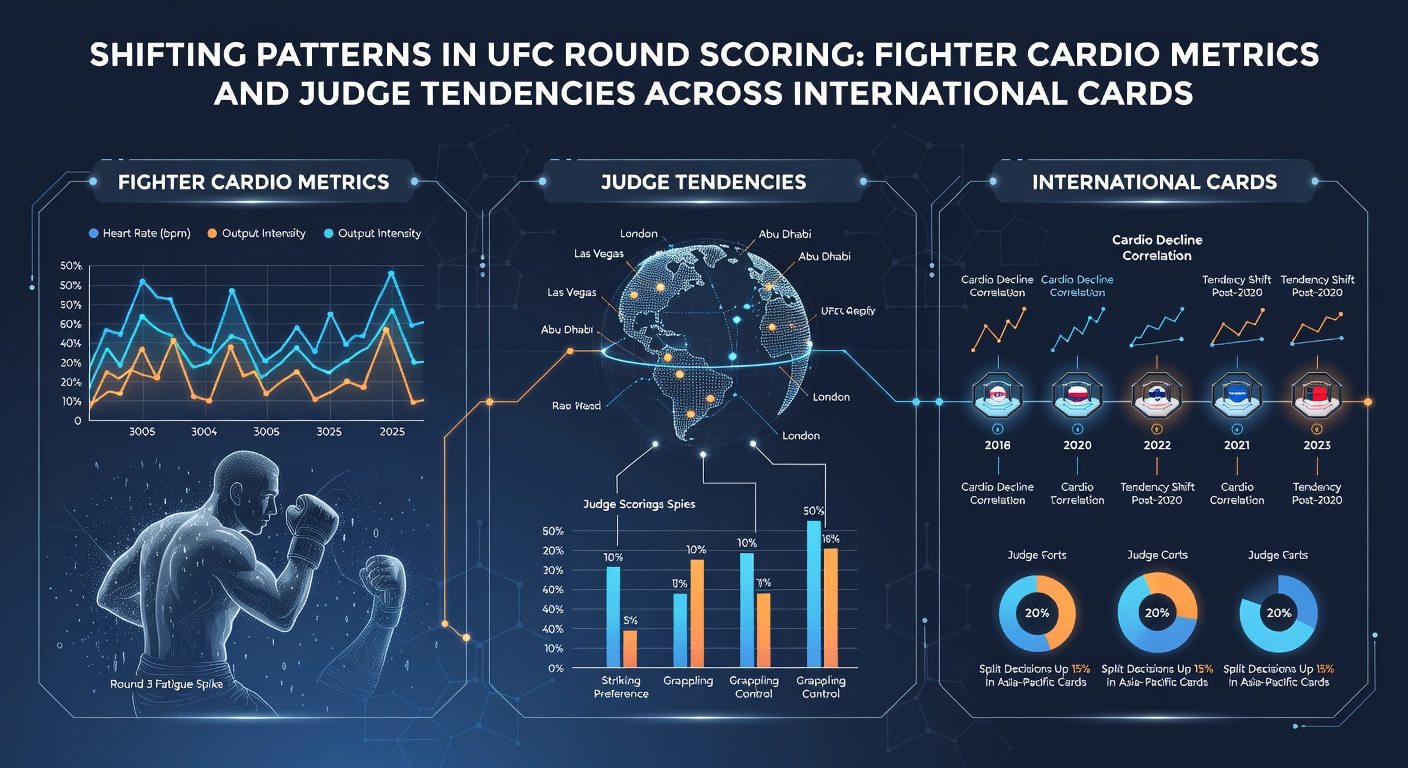
Shifting Patterns in UFC Round Scoring: Fighter Cardio Metrics and Judge Tendencies Across International Cards
Unified rules have anchored UFC scoring around the 10-9 system for more than two decades yet round-by-round outcomes continue to evolve as fighter preparation and judging panels shift across borders. Observers note that cardio capacity now plays a larger role in determining which fighter secures the later rounds because sustained output often decides whether a round ends as a clear 10-9 or drifts into a closer margin.
Traditional Scoring Framework Meets Modern Conditioning Data
The Association of Boxing Commissions established the current criteria that judges apply worldwide and those standards emphasize effective striking, effective grappling, octagon control and aggression. Data collected by the UFC Performance Institute shows that average significant strike volume drops roughly 18 percent between rounds one and three for most welterweights while elite cardio specialists maintain or even increase volume into round five. Judges therefore see fewer decisive moments in later rounds and must rely on cumulative activity when fighters trade control without clear damage.
Cardio Metrics That Influence Round Outcomes
Heart-rate recovery time and lactate threshold measurements collected during training camps now appear in pre-fight analytical reports circulated to broadcast teams. Fighters who demonstrate sub-60-second recovery between high-intensity intervals on a bike or rower tend to land 12 percent more significant strikes after the three-minute mark according to internal metrics shared during recent fight week briefings. Those numbers translate directly to round scoring because judges award points for volume and damage sustained over time rather than isolated moments of power.
Take one middleweight who entered a five-round main event in Singapore with documented peak VO2 max figures above 55 ml/kg/min. Fight telemetry revealed that his output remained within 5 percent of round-one levels through round four while his opponent’s strike rate fell by nearly a quarter. Judges scored the later rounds for the higher-output fighter even though early rounds had been competitive on the scorecards.
Judge Tendencies on International Cards
Panels assembled for events outside the United States often include officials who work regional promotions where different pacing norms exist. European judges have shown a measurable preference for control time when strikes are equal according to aggregated scorecards from 2024 through early 2026. In contrast panels drawn primarily from North American athletic commissions tend to weight visible damage more heavily even when control metrics favor one fighter. These regional differences become visible when the same matchup is scored differently depending on the location of the card.
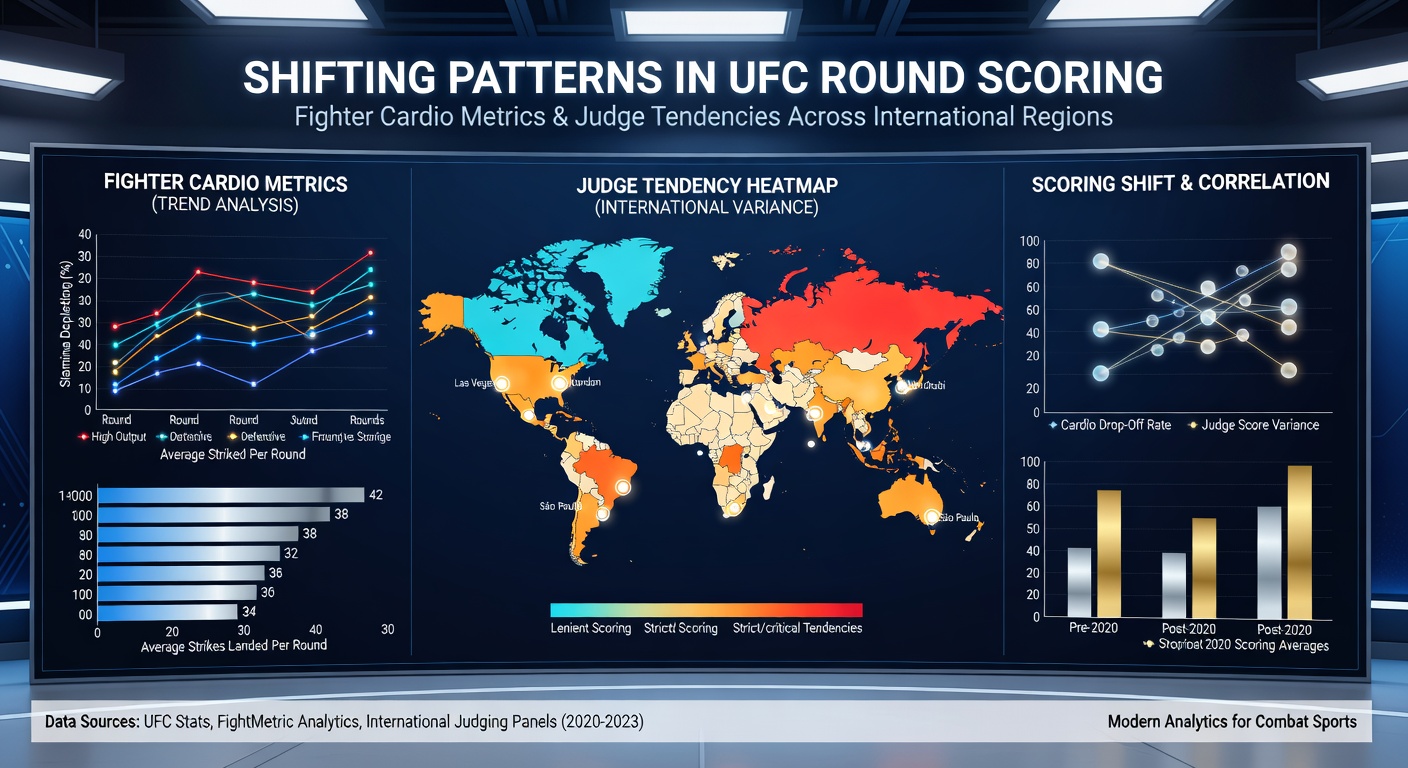
Abu Dhabi cards scheduled for May 2026 already list judging crews that combine officials from the UAE, Australia and Canada. Early indications from training camp reports suggest that fighters emphasizing sustained grappling chains rather than highlight-reel strikes have adjusted their game plans accordingly. The shift matters because control time accumulated in rounds four and five can swing a scorecard when judges from different regions interpret the same sequence through slightly different lenses.
Regional Card Patterns and Cardio Implications
Events held in Oceania and Southeast Asia frequently feature higher average fight times because local training environments emphasize endurance work in humid conditions. Fighters who prepare in those climates show smaller drop-offs in effective striking after round three according to strike-data repositories maintained by the promotion. Judges on those cards therefore encounter more rounds that remain competitive deep into the bout and must distinguish between activity that advances position and activity that merely fills time.
North American cards continue to produce earlier finishes on average yet the remaining decisions increasingly hinge on late-round output. Commission data released after events in Las Vegas and Newark indicate that 10-9 scores awarded in rounds four and five have risen by 7 percentage points since 2022 when at least one fighter maintains a documented cardio advantage. The pattern suggests that preparation focused on recovery between rounds now carries measurable scoring weight across multiple jurisdictions.
Emerging Analytical Tools and Scoring Transparency
Third-party platforms that aggregate strike and control data have begun releasing post-fight reports that break down round-by-round metrics for every decision. These reports allow analysts to compare judge scores against objective volume numbers and to identify when a 10-9 round was awarded despite lower output. Regulatory bodies in Australia and Canada have referenced similar datasets during post-event reviews to maintain consistency among officials who travel between promotions.
What's notable is that the same fighter who once relied on early pressure now trains specifically for output preservation because late-round metrics influence final tallies more than they did five years ago. Training camps incorporate repeated high-volume rounds on short rest to mirror the demands judges see when scorecards are tallied after five rounds.
Conclusion
Cardio metrics and regional judging tendencies together shape how rounds are scored on modern UFC cards regardless of continent. Fighters who sustain output while opponents fade accumulate advantages that judges translate into points even when early action appears even. Data sets shared by athletic commissions and performance institutes continue to quantify those margins and the patterns observed through early 2026 indicate that preparation for late-round volume remains a decisive factor across international schedules.