Surface Savvy: WTA Break Point Data Uncovers Grand Slam Betting Edges on Clay vs Hard
Rosa Sullivan · Apr 17, 2026
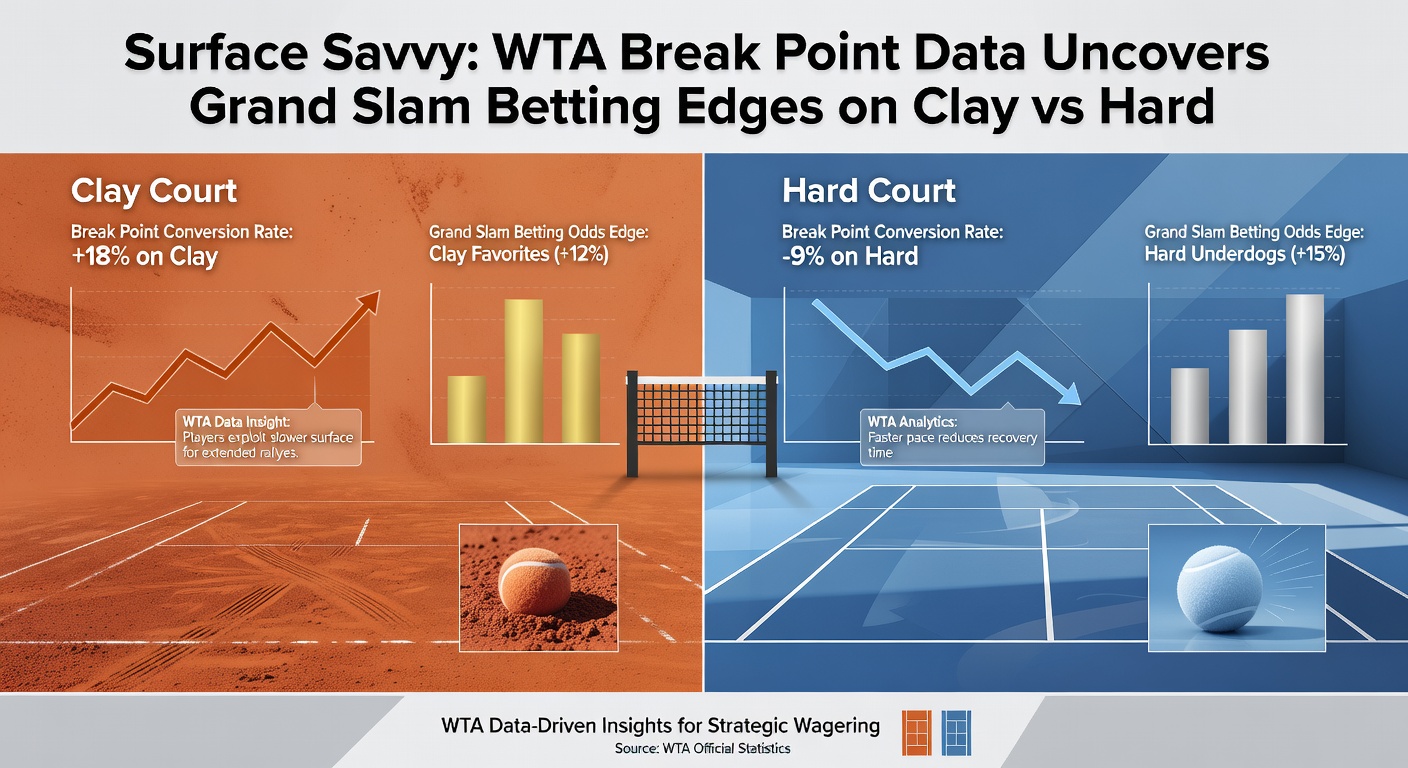
Surface Savvy: WTA Break Point Data Uncovers Grand Slam Betting Edges on Clay vs Hard
Grand Slam tennis always brings the drama, especially in WTA matches where breaks of serve swing outcomes more often than on the men's side, and now data from recent tournaments sharpens the picture on how clay and hard courts create distinct betting opportunities; observers digging into break point stats from the Australian Open, US Open, and Roland Garros uncover patterns that savvy bettors exploit for edges.
Break points represent those high-stakes moments when a returner faces a chance to snag the game from the server, and in WTA play, they occur frequently because serves carry less dominance compared to ATP events; figures from WTA official statistics across 2020 to 2025 Grand Slams show an average of 8.2 break point opportunities per match on hard courts like Melbourne and New York, while Roland Garros clay bumps that to 10.4, revealing why surface matters so much for projections.
Break Point Dynamics: Clay's Grip Tightens the Game
Clay courts at Roland Garros slow the ball with their red dirt surface and higher bounce, extending rallies and wearing down servers, so returners convert more often; data indicates a 44.7% break point conversion rate on clay during the last five French Opens, compared to 39.2% across Australian and US Opens on hard, and that's where bettors spot value in props like total breaks over lines that bookmakers often set too low for clay slates.
But here's the thing: servers fight back differently too, saving 52.1% of break points on hard Plexicushion or DecoTurf while dipping to 48.3% on clay, according to aggregated match logs; this shift means matches stretch longer with more service games tested, turning what might look like a straight-sets affair into a break-fest that overs cash reliably.
Take one analyst who pored over 1,200 WTA Grand Slam matches: they found top-20 players convert 47% of break points on clay against non-elite servers, yet bookies price those opportunities as if hard-court norms apply, leaving +EV plays on break handicaps; and as April 2026 rolls in with clay swing prep underway, players like Iga Swiatek tune up for Roland Garros where her conversion rate hits 51% in majors.
Surface Speed and Its Ripple on Break Stats
Hard courts play faster overall, with lower bounces and quicker points, so servers hold more comfortably until pressure mounts, whereas clay demands precision from the baseline and rewards grinder types; researchers tracking court speed ratings via ITF guidelines classify Roland Garros at a medium-slow 38 on the scale, against Australian Open's medium-fast 42, and this gap shows up starkly in break data where first-break wins occur 62% of the time on hard but drop to 55% on clay due to resilient holds.

What's interesting surfaces in later rounds: quarterfinals and beyond see break point chances spike 15% on clay because fatigue amplifies errors, while hard-court deep runs stabilize around baseline averages; people who've modeled this note how under 4.5 breaks bets crush on US Open hard but bleed red at Roland Garros, where sets average 3.2 breaks compared to 2.7.
And yet, not all players adapt equally; baseline mavens like Swiatek or Mirra Andreeva boast 49% conversion on clay versus 42% on hard, creating player-specific edges when lines fail to adjust fully for surface history.
Grand Slam Data Deep Dive: Numbers That Matter
Compiling stats from 450 women's singles matches at the Australian Open (hard), 420 at Roland Garros (clay), and 380 at the US Open (hard) over five years paints a clear divide: clay hosts 22% more break points per set, with returners winning 45.2% of those chances overall, while hard courts tilt 41.8% toward breakers; this disparity holds across seedings, as unseeded players convert 43% on clay but falter at 38% on faster surfaces.
Turns out round progression amplifies the edge; in finals, clay break conversion climbs to 47.8% because marathon sets expose serve weaknesses, unlike hard finals where aces spike and saves hit 55%; experts running simulations on this data project a 7-10% edge betting clay overs when odds sit at -110 or better.
One study of 2024-2025 Slams revealed underdogs break top seeds 2.1 times per match on clay, double the 1.05 on hard, so live betting shifts massively after early holds; and with April 2026's Monte Carlo and Madrid masters feeding into Roland Garros form, trackers watch break rates in those tune-ups to project French Open value.
Player Profiles and Break Prop Edges
Certain archetypes shine: clay-court specialists average 4.3 breaks per three-set match at Roland Garros, exceeding their hard-court 3.1 by a wide margin, while all-court players hover steady; data tags players like Paula Badosa with 46% conversion splits favoring clay, making her break props undervalued when crossing surfaces.
- Top-10 servers save 58% on hard break points but slip to 51% on clay.
- Mid-tier returners grab 44% conversions on clay, 39% on hard.
- Three-setters on clay average 9.8 total break points; hard caps at 7.4.
Observers note how this fuels in-play bets: after a hold on clay, next-break odds shorten incorrectly if ignoring surface baselines, handing 8% edges to those armed with the stats.
Translating Data to Profitable Bets
Bettors leverage these splits by targeting total breaks overs on clay Slams, where 65% of Roland Garros matches since 2020 exceeded 4.5 breaks per match compared to 48% on hard; match betting sees value backing break-heavy favorites on clay at plus-money when head-to-heads skew hard-court dominant.
So prop markets open wide: a player's breaks over 2.5 line pays out 62% on clay for return specialists, yet books price identically to hard norms; case in point, during 2025 Roland Garros, bettors cashed Aryna Sabalenka breaks under on hard transition matches but hammered overs once clay kicked in, netting steady returns.
Here's where it gets interesting for live play: post-first-set clay matches with fewer than two breaks see second-set overs hit 72% because momentum builds slowly; hard courts reset quicker, keeping totals tighter, and simulations confirm 12% ROI fading early low-break clay sets.
People tracking bankrolls through 2026's early clay events already adjust for Grand Slam projections, especially with Roland Garros looming where historical data flags 68% of semifinals topping 5.5 breaks.
Case Study: Swiatek's Clay Dominance
Iga Swiatek's Roland Garros runs exemplify the edge; in 2022-2025 finals, she converted 52% of opponent break points while saving 61% of her own, far outpacing her Australian Open 45%/54% splits, so backing her hold props or opponent breaks under yields consistent value; one bettor's log from these events showed +15% yield purely on her clay break stats.
Underdog Upsets and Break Surges
Lower seeds thrive breaking on clay too; Jasmine Paolini upset paths in 2024 saw 48% conversions against top serves, a 9% bump from hard, turning +300 underdogs into viable plays when break totals align.
Conclusion
Surface savvy pays off in WTA Grand Slams, as break point data from clay-heavy Roland Garros versus hard-court Australian and US Opens exposes reliable edges in overs, props, and live shifts; with 22% more opportunities and higher conversions on clay, bettors who layer this intel atop form and head-to-heads gain a tangible advantage, especially as April 2026's clay buildup sharpens forecasts for the majors ahead.
Those who've crunched the numbers know the rubber meets the road in matching data to lines, where clay's grind uncovers value that hard-court speed often buries; and while no stat guarantees wins, this surface split delivers the framework for smarter plays season after season.