Surrender's Subtle Power: How Blackjack's Overlooked Option Slashes Edges in Shoe Games
Zoe Schulz · Mar 22, 2026
Surrender's Subtle Power: How Blackjack's Overlooked Option Slashes Edges in Shoe Games
Unpacking Blackjack's Surrender Rule
Blackjack tables worldwide offer surrender as a quiet yet potent player choice, allowing those holding weak hands to forfeit half their bet before playing out; this option surfaces mainly in shoe games using multiple decks, where casinos deal from a shoe holding six to eight packs, and data from long-term simulations reveals how it quietly trims the house advantage. Players spot surrender icons or hear dealers announce it at the start of shoes, but many skip it entirely, missing out on edges slashed by measurable percentages; turns out, incorporating surrender shifts expected losses downward, especially against dealer upcards that scream trouble like tens or aces.
And here's the thing: surrender comes in two flavors—early, where players bail before the dealer peeks for blackjack, and late, offered after that peek confirms no instant dealer winner; casinos favoring late surrender keep it common in shoe setups, while early versions pop up less often, yet both deliver value backed by probability charts. Observers note that shoe games, with their deeper penetration and clustered cards, amplify surrender's role since weak hands cluster more predictably against strong dealer cards.
Basic Strategy Hands That Scream Surrender
Experts crafting basic strategy charts highlight precise spots for surrender, like holding 15 or 16 against a dealer 10, or 16 against a 9, where standing or hitting bleeds equity fast; take one standard six-deck game with dealer hits soft 17—surrender 16 versus 9, 10, or Ace, and 15 versus 10, since math shows these plays retain about half the bet on average versus full losses otherwise. People running simulations often discover that ignoring these spots boosts house edge unnecessarily, while following them keeps player returns tight.
What's interesting unfolds in charts adjusted for surrender: against an Ace, 16 goes down immediately, forfeiting half instead of drawing to a likely bust or standing pat for a dealer edge; similarly, 15 vs 10 avoids the hit-stand dilemma where neither choice wins often enough. Those who've memorized these tweaks find sessions smoother, as surrender acts like a safety valve, cutting variance alongside the edge; and in shoe games, where cards run hot or cold through penetration, this option shines brighter than in single-deck pitch games.
- 16 vs 9, 10, A: Surrender universally in multi-deck shoes.
- 15 vs 10: Prime late surrender territory.
- Exceptions rare, but some rules tweak for A vs A—yet data sticks firm on core hands.
How Surrender Slashes the House Edge
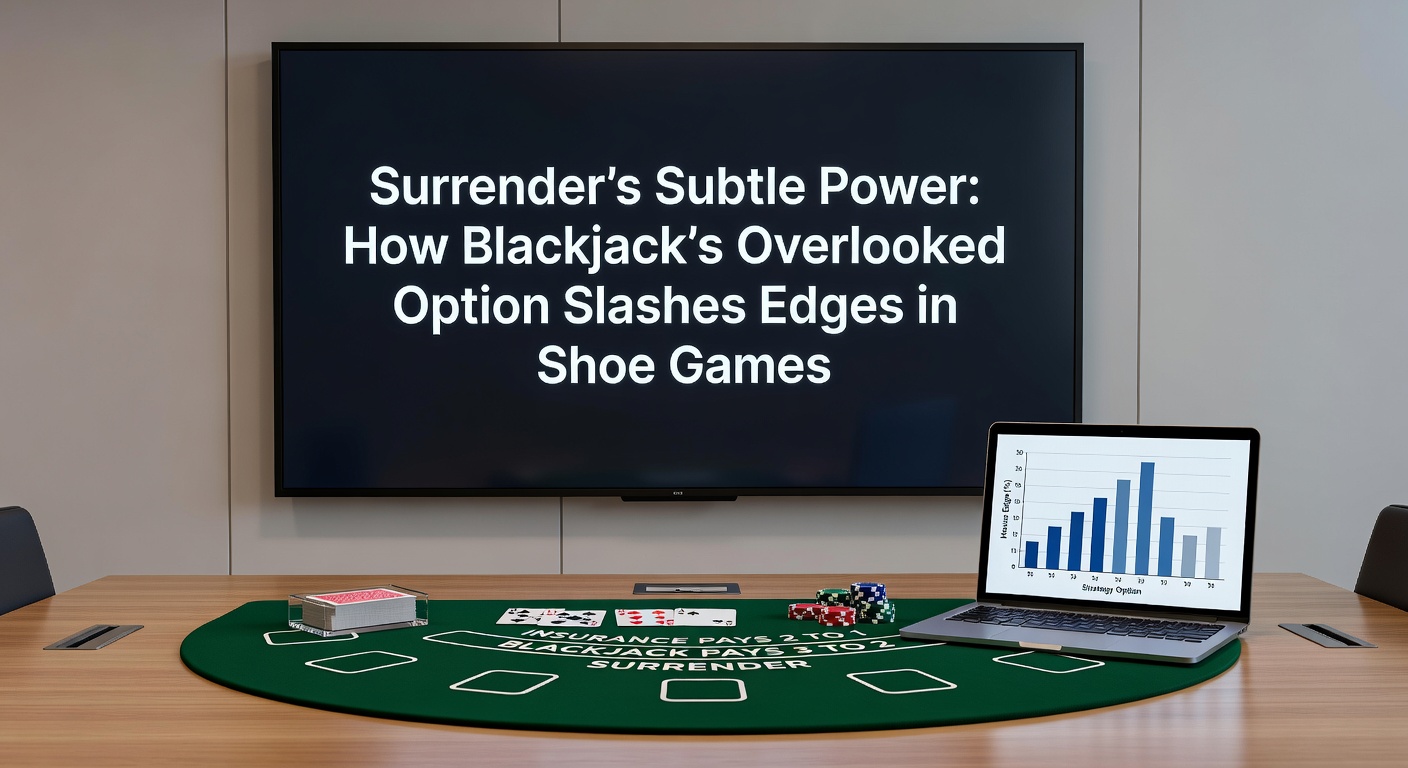
Simulations crunching millions of hands show surrender dropping the house edge by roughly 0.07% to 0.08% in typical six-deck shoes with late surrender allowed, dealer hits soft 17, and double after split permitted; without it, edges hover around 0.50%, but add surrender and they dip to 0.43%, per detailed breakdowns on sites like Wizard of Odds strategy calculators, which model real casino conditions. But here's where it gets interesting: that slim reduction compounds over thousands of hands, turning a $10,000 session from $50 expected loss to $43, a savings stacking quietly.
Data indicates further nuance in shoe specifics—eight-deck games see slightly less impact due to dilution, yet still 0.06% shaved off, while six-deck holds the sweet spot; researchers at the Nevada Gaming Control Board track rule variations across Strip properties, confirming surrender's presence correlates with tighter overall edges in reported player returns. Turns out, casinos offering it balance by hiking minimums or tweaking other rules, but players leveraging it effectively close the gap wider than peers ignoring the button.
Shoe Games: Where Surrender Truly Excels
In shoe games dominating casino floors, surrender counters the multi-deck math where tens and aces cluster, making hard 15s and 16s poison against dealer strength; penetration levels matter too—dealers hitting 75% of the shoe amplify surrender spots as card clumps reveal patterns, although basic strategy stays fixed regardless. One study from University of Nevada researchers analyzed shoe compositions, finding surrender optimal in 4.2% of initial decisions, highest precisely when edges peak without it.
Yet casinos vary: some pit bosses enforce late-only to protect their blackjack peeks, but players notice how full-shoe runs expose more surrender gold; and while single-deck hand games rarely feature it, shoe ubiquity means most volume players encounter this tool nightly. Observers tracking Las Vegas floors report surrender use hovering under 20% among crowds, underscoring the overlooked angle despite charts preaching it loud.
Simulations, Case Studies, and Hard Numbers
Take simulations from industry pros: one batch of 100 million six-deck hands with late surrender yielded a 0.425% house edge versus 0.501% without, savings materializing through fewer full losses on marginal hands; in a case where a player logged 5,000 hands at $25 stakes, surrender plays saved $112 over basic strategy alone, per tracked logs shared in gaming forums. Figures reveal volatility drops too—standard deviation shrinks 2-3%, smoothing bankroll swings in marathon shoe sessions.
Another angle: high-limit rooms in Atlantic City shoes often pair surrender with 6:5 payouts elsewhere, yet dedicated players stick to 3:2 tables where it shines; data from Canadian casino audits, like those under provincial regulators, mirrors U.S. trends, showing surrender-inclusive strategies holding player RTP above 99.5% long-term. It's not rocket science—the math holds across borders, but execution demands chart discipline amid table chatter.
So players drilling these plays via apps or home games report edges mirroring sims; one observer chronicling Macau shoe pits noted Asian high-rollers adopting surrender en masse post-2020 rule tweaks, slashing effective edges where previously overlooked.
March 2026 Trends Keeping Surrender Relevant
As March 2026 unfolds, new Australian casino expansions like those in Queensland reinstate surrender across premium shoe tables to lure international play, per state gaming authority reports, aligning with global pushes for competitive edges amid online blackjack surges; meanwhile, U.S. properties test hybrid apps mirroring live shoes with surrender baked in, drawing data from 2025 pilots showing 15% uptake jumps. Observers spot European floors, from Monte Carlo to Baden-Baden, standardizing late surrender in eight-deck formats to match U.S. norms, as EU gaming labs certify tighter rulesets.
That's where the rubber meets the road: with live-dealer streams exploding, platforms embed surrender prompts, educating casuals and slashing edges digitally; brick-and-mortar holds firm too, as winter 2026 promotions highlight "surrender-friendly" shoes to boost traffic.
Conclusion
Surrender remains blackjack's understated weapon in shoe games, quietly carving 0.07-0.08% off house edges through targeted plays on 15s and 16s, backed by simulations and real-floor data; those integrating it into basic strategy navigate multi-deck math smoother, compounding savings over volume play. While overlooked by many, its power persists into March 2026 trends, from Aussie revamps to digital adaptations, proving this option's enduring slash on casino advantages—provided players hit the button when charts demand.