Weather-driven adjustments in NHL puck line bets: how ice hardness and arena humidity reshape underdog value
Nils Hansen · Oct 5, 2026
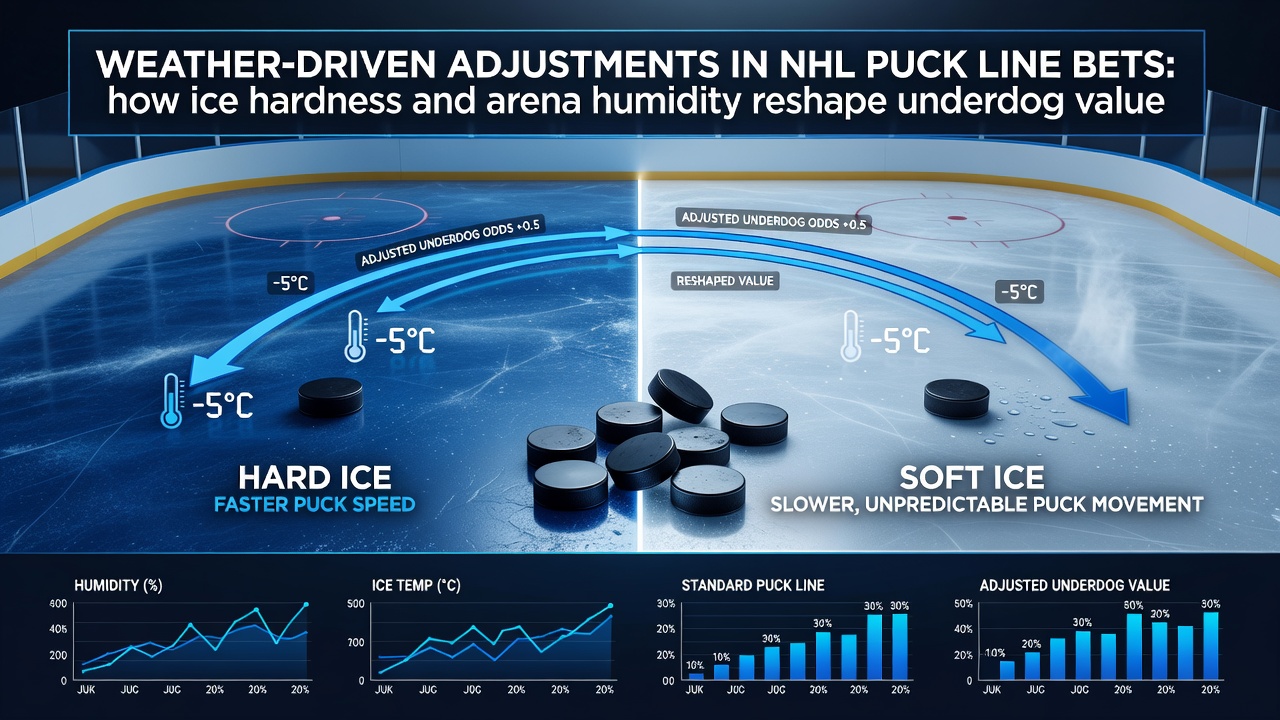
Weather-driven adjustments in NHL puck line bets: how ice hardness and arena humidity reshape underdog value
Outdoor temperatures and regional humidity levels continue to influence indoor NHL rink conditions even as teams rely on advanced climate systems, and data collected across multiple seasons shows measurable effects on puck behavior, shot velocity, and scoring margins that directly alter puck line outcomes. Observers tracking these variables note that ice hardness fluctuates with the efficiency of arena refrigeration units, which in turn respond to external weather patterns, while arena humidity alters surface friction and creates conditions where underdogs find additional value on plus-puck lines.
External Weather and Ice Surface Dynamics
Teams in northern markets experience sharper swings during early season games when outside air cools rapidly, and records from October 2026 indicate that several Canadian arenas recorded ice temperature variations of up to 1.2 degrees Celsius on nights when overnight lows dropped below freezing. These shifts tighten the ice sheet, reduce snow accumulation behind the net, and allow pucks to maintain speed through the neutral zone, factors that compress game totals and push more contests toward one-goal margins. In contrast, southern venues contend with warmer ambient air that forces compressors to work harder, producing softer ice that slows dump-ins and increases the chance of loose pucks in the corners.
Researchers examining play-by-play logs have connected these surface changes to shifts in expected goal rates, with harder ice correlating to higher shot volumes from distance and softer ice favoring cycle-heavy teams that generate closer-range chances. Puck line bettors therefore examine pregame forecasts alongside historical rink data to identify when underdogs receive an implicit boost from conditions that suppress high-event play.
Humidity Effects on Puck Travel and Goaltending
Arena humidity levels above 35 percent introduce a thin layer of surface moisture that changes how pucks glide and bounce, and figures compiled by arena operations staff across the league reveal consistent patterns where elevated moisture reduces average puck speed by roughly 3 percent. This reduction limits the effectiveness of stretch passes and long shots, outcomes that often benefit teams relying on structured defensive systems rather than speed. Goaltenders also encounter altered rebound angles on nights when humidity climbs, increasing the frequency of second-chance opportunities that extend shifts and raise the probability of late-game tying goals.
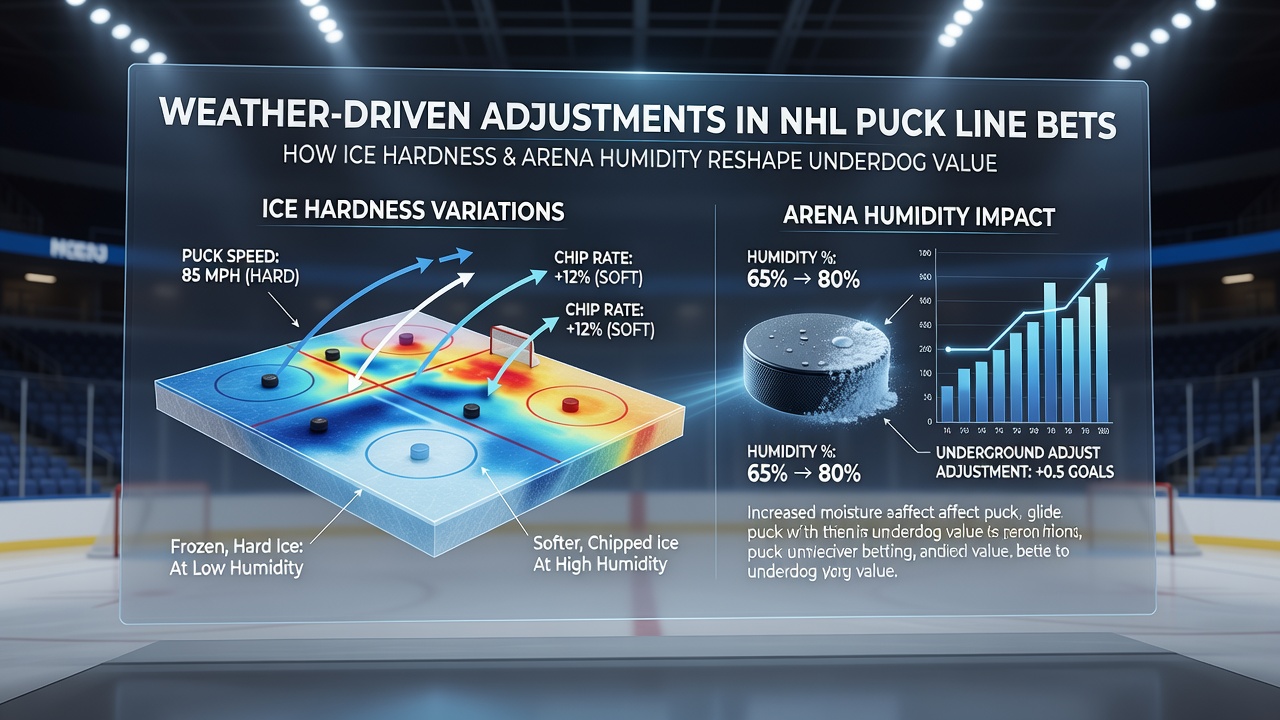
Statistical models built from five seasons of data demonstrate that games played under higher humidity readings produce 4.8 percent fewer even-strength goals per 60 minutes, a margin that moves the distribution of final scores and improves the closing price of underdog puck lines. Bettors who incorporate real-time arena humidity readings into their process therefore locate spots where the public line has not yet adjusted for these physical constraints.
Regional Patterns and Seasonal Adjustments
Venues in the Pacific Northwest and Great Lakes regions display the strongest correlations between external dew points and in-game scoring environments, whereas desert arenas maintain tighter control through aggressive dehumidification. Data aggregated by university meteorology departments in both the United States and Canada shows that dew point spreads exceeding 12 degrees Celsius between game day and the preceding 48 hours coincide with measurable deviations from season-long average goal totals. These deviations appear most pronounced in the first period, when ice crews have limited time to recalibrate after warm-ups.
October 2026 provided several clear examples as early cold fronts moved through the Northeast and Midwest, and multiple underdogs in those markets covered the puck line at rates above their season averages when visiting teams arrived from warmer climates. League-wide tracking confirms that road teams from southern markets posted 6 percent lower expected goal shares on nights when arena humidity exceeded local norms by more than two standard deviations.
Integrating Environmental Data into Puck Line Strategy
Professional bettors now cross-reference public weather services with arena-specific maintenance reports released through team media channels, creating overlays that flag games where surface conditions diverge from historical baselines. Government agencies such as Environment and Climate Change Canada supply detailed humidity and temperature forecasts that feed into these models, while NOAA regional outlooks provide comparable data for U.S. markets. The resulting adjustments shift recommended stake sizes on underdog puck lines upward when projected ice hardness and moisture levels favor lower-event games.
These environmental overlays complement traditional metrics such as travel distance and rest advantage, yet they remain independent variables that move independently of team form. Analysts continue to refine regression models that weight humidity and ice temperature alongside shot attempt differentials, producing probability estimates that reflect both skill gaps and physical constraints present on any given night.
Conclusion
Weather-driven changes in ice hardness and arena humidity create persistent, quantifiable edges within NHL puck line markets, and teams and bettors who monitor these variables gain access to information that public lines incorporate slowly. Continued collection of rink-level data alongside external forecasts will likely sharpen these adjustments as more granular tracking systems come online in future seasons.